Elliptical Breathing for Vocal Health: A Gentle How-To
By Priya Natarajan • 17th May
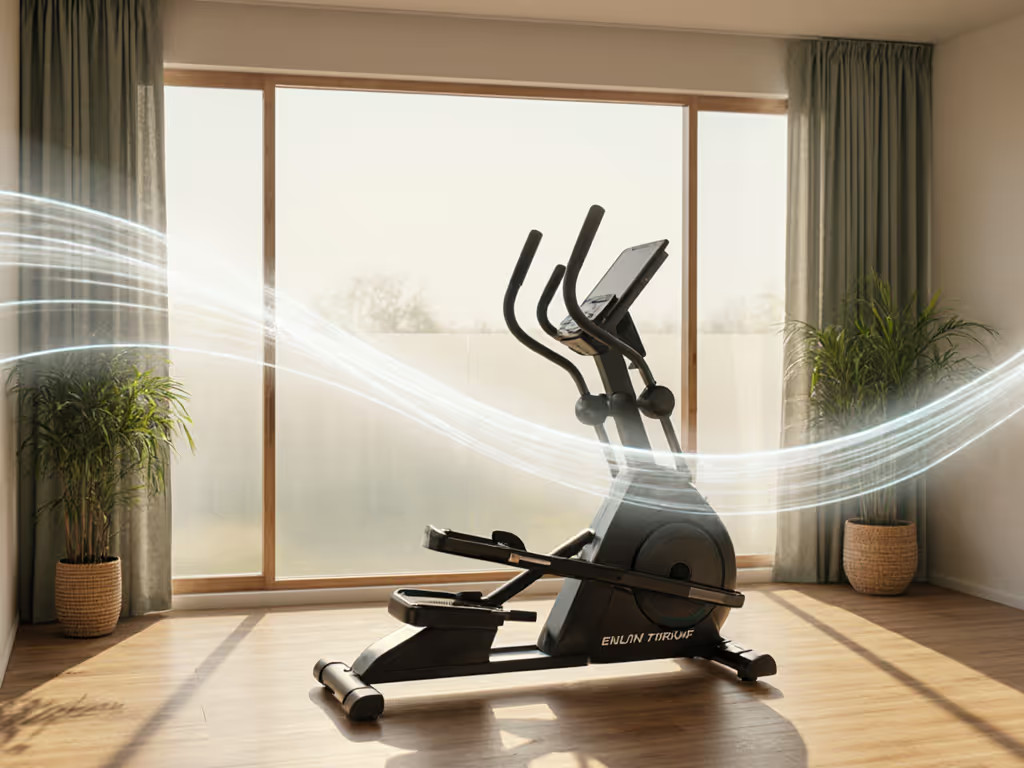
If you're a singer, teacher, public speaker, or anyone who uses your voice all day, elliptical breathing for vocal health can quietly become one of your best tools. Done well, respiratory function elliptical training builds the kind of steady, low drama breath support your voice craves, without punishing joints or eating your whole evening.
Small, repeatable wins turn cardio into a lifelong habit.
Let's keep this simple, joint-friendly, and easy to fit between real-life responsibilities.
The Problem: Your Voice Is Trained, But Your Breath Tires Out
You can know all the right vocal techniques and still feel:
- Out of breath by the end of long phrases
- Tight in the neck and shoulders, even with good posture
- Winded after a flight of stairs, then struggling to "reset" your support before rehearsal
- Hoarse or fatigued after a long teaching or meeting day
At the same time, you've probably heard you should be doing cardio for overall health and stamina. Treadmills can feel harsh on knees or ankles. Outdoor runs need time, weather, and daylight. Stationary bikes may crunch your posture.
The elliptical sits in the middle: low-impact, upright posture, and quieter for apartments and sleeping kids. If noise is a concern, see our guide to quiet compact ellipticals under $1,000. But very few people are taught how to turn it into respiratory conditioning cardio that directly supports vocal work.
So you end up either:
- Skipping cardio altogether, or
- Going too hard, gasping for air, and feeling less in control of your breath
Neither helps you step on stage, or into a long Zoom day, feeling vocally confident.
Why Typical Cardio Can Backfire for Your Voice
Most cardio is designed for calorie counts and sweat, not for breath quality. A few common problems:
-
Mouth-only, shallow breathing
High-intensity pushes you into fast, upper-chest breaths. That might be fine for fitness metrics, but it doesn't feel like the grounded, expansive breath your voice needs. -
Neck and shoulder tension
Gripping the elliptical handles too hard, leaning forward, or craning toward the console encourages the muscles around your throat to overwork, exactly what you don't want in practice or performance. For posture cues that keep your throat relaxed, use our elliptical form guide. -
All-or-nothing intensity
If every workout is a "crush it" session, your nervous system stays revved. You leave breathless and wired instead of calm, supported, and ready to sing. -
Random workouts, no carryover
Without a plan, one day you pedal hard while scrolling email, another you barely move. There's no structured bridge between what you do on the machine and how you breathe when you sing or speak.
The result: good intentions, inconsistent workouts, and no obvious impact on your vocal endurance.
Let's flip that.
The Solution: A Voice-Friendly Elliptical Breathing Framework
We'll build a simple structure that uses diaphragmatic breathing elliptical practice to support your voice. No complicated programs, no hour-long marathons.
Key principles:
- Start easier than you think.
- Keep sessions short enough that you want to come back.
- Focus on how breathing feels, not just on numbers.
- Consistency over intensity.
Step 1: Set Up Your Space for Calm, Not Chaos
A low-friction setup matters more than the perfect plan. If stepping onto the machine is mentally or physically annoying, you'll skip it.
Quick setup checklist:
- Location: Quiet corner where you can hear your own breathing. Avoid loud TVs or blasting music at first.
- Clear access: Nothing to move or rearrange before each session. If you need to drag the machine or fold it out, your brain will bargain its way out.
- Console simplicity: Save one "go-to" manual program with an easy resistance level. One button to start.
- Comfortable step-up height: If climbing on feels like a mini-hike, you'll hesitate. Adjust positioning or mat height to make entry feel natural.
- Environment: Small towel, water within reach, and enough airflow that you're not overheating.
The more your elliptical feels like "walk in, tap start, go," the more likely you are to build a routine that sticks. A few small upgrades can help—our elliptical accessories guide covers mats, fans, and chest straps that keep sessions comfortable and focused.
Step 2: Rehearse Diaphragmatic Breathing Off the Machine
Before mixing breath and movement, teach your body the pattern in stillness.
Try this standing or seated:
- Place one hand on your lower ribs, one on your upper chest.
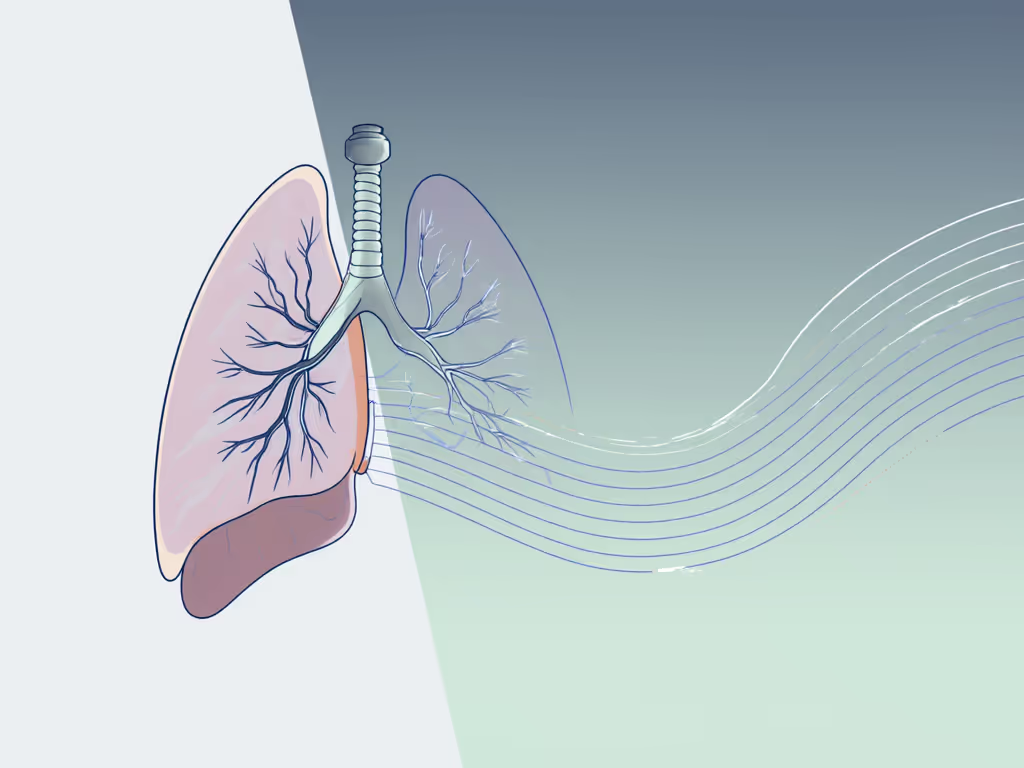
- Inhale gently through your nose for 3-4 seconds: feel the lower ribs widen and the belly soften slightly. Upper chest stays relatively quiet.
- Exhale for 4-6 seconds through relaxed lips (a soft "sss" or "ffff" can help). Let the ribs ease inward.
- Keep neck and shoulders relaxed; imagine your collarbones floating rather than lifting.
Do 6-8 breaths like this, 1-2 times a day, until it feels natural.
You're building the same foundation singers use for support, but calmly, without pitch, lyrics, or performance pressure.
Step 3: Transfer That Breath to the Elliptical (Very Easy Pace)
Now we connect breath to gentle movement.
Setup:
- Resistance: very low, just enough to feel the pedals move smoothly.
- Time target: 5-10 minutes, max, for the first few sessions.
Posture and grip:
- Stand tall, with soft knees, not locked.
- Imagine a string lifting the crown of your head toward the ceiling.
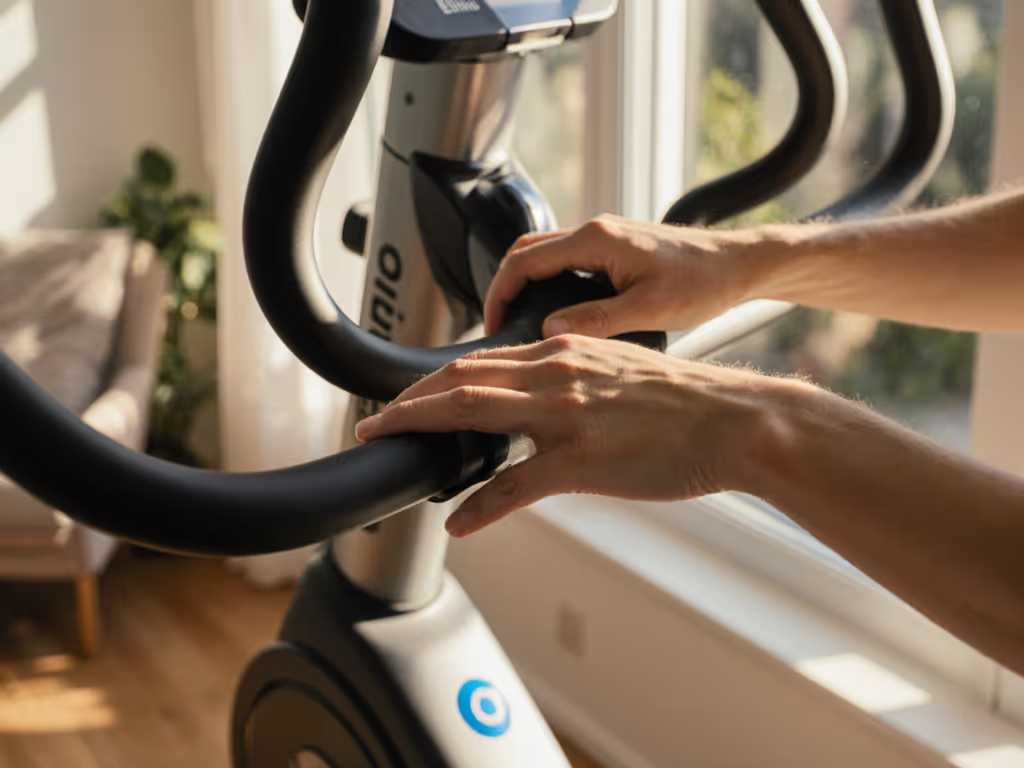
- Hold the handles lightly, like you're holding a paper cup of water you don't want to crush.
Breathing pattern (basic):
- Inhale for 3-4 strides.
- Exhale for 4-6 strides.
You can breathe through your nose, or nose-in/mouth-out, whichever lets you keep the breath low and steady. The key is matching breath rhythm to your steps.
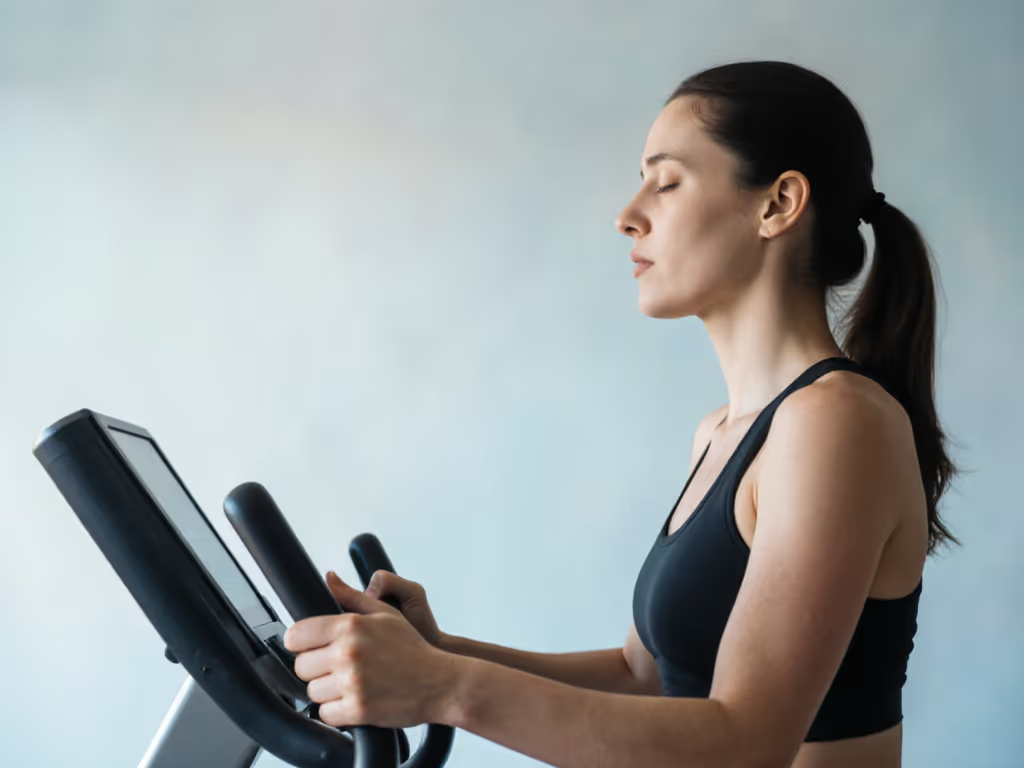
If you can talk in full sentences while you do this, you're in the right zone for respiratory conditioning cardio that supports vocal work. If you're gasping or can only say a few words, dial the intensity down.
Breathing Patterns That Support Vocal Control
Once the basic pattern feels comfortable, you can treat the elliptical as a lab for vocal cord strengthening elliptical work, not by yelling over the fan, but by challenging your breath in smart, controlled ways. For a deeper dive tailored to performers, see our vocal stamina breathing techniques on the elliptical.
Pattern A: Even, Supported Breaths (Endurance)
- Inhale for 4 strides
- Exhale for 6-8 strides
Stay at easy to moderate effort. This trains you to manage long, smooth exhalations while the body works, much like sustaining a phrase.
Pattern B: Slow, Calm Exhales (Control)
- Inhale for 3-4 strides
- Pause for 1-2 strides (no tension; just a gentle hold)
- Exhale for 6-8 strides
Think of this as practicing "don't rush the air" under light load. If you start feeling any throat tension, shorten the exhale or lower resistance.
Pattern C: Gentle "Phrase" Intervals (Expressiveness)
Cycle through 1-2 minutes each of:
- Short "phrase" cycles:
- Inhale 3 strides, exhale 4 strides.
- Long "phrase" cycles:
- Inhale 4 strides, exhale 8-10 strides.
Adding Voice-Friendly Drills (Without Singing in the Gym)
You don't need to belt on the elliptical to support your vocal performance elliptical workout.
Try these low-key options, especially if you're at home:
- Silent shaping: During long exhales, imagine you're sustaining a vowel, but keep sound almost inaudible. Focus on steady airflow.
- Soft lip trills or tongue trills: On an easy exhale, add a gentle trill. If intensity rises or you feel wobble, lower resistance.
- Post-workout cool-down hums: After you step off and stretch, do 2-3 minutes of light humming or semi-occluded exercises (straw phonation, lip trills) so your voice associates the feeling of supported breath with sound.
Keep volume low and sensation easy. The goal is marrying stable airflow with relaxed phonation, not pushing range or power.
Sample Short Routines for Busy Vocal Professionals
Here are two plug-and-play options you can save as presets. Adjust times slightly as needed, but keep them short enough to finish consistently.
12-Minute Pre-Rehearsal Breath Primer
- 2 minutes - Very easy warm-up
- Resistance: lowest setting
- Breathing: free, natural
- 6 minutes - Pattern A (Endurance)
- Inhale 4 strides, exhale 6-8 strides
- Effort: can talk in full sentences
- 2 minutes - Pattern B (Control)
- Inhale 3-4 strides, pause 1-2, exhale 6-8 strides
- 2 minutes - Cool-down & reset
- Back to very easy effort
- Quiet, relaxed breathing
Step off, stretch briefly, then move into your vocal warm-up.
18-Minute Evening Conditioning for Voice Teachers & Speakers
- 3 minutes - Easy ramp-up
- Gentle resistance
- Natural breathing
- 4 minutes - Pattern C (Short phrases)
- Inhale 3, exhale 4 strides
- 4 minutes - Pattern C (Long phrases)
- Inhale 4, exhale 8-10 strides
- 5 minutes - Free practice
- Alternate Pattern A and B every minute
- Adjust resistance to stay in conversational zone
- 2 minutes - Cool-down
- Very easy effort, let breath settle
If you're just returning to fitness (or coming off an injury), cut each work segment in half and build up slowly. I've been there: short, pre-coffee sessions on an elliptical in a small apartment were what rebuilt my momentum after a setback. The key wasn't intensity; it was showing up.
How Often Should You Do This?
For most busy adults, a realistic target is:
- 3-4 sessions per week
- 10-20 minutes per session
That's enough for meaningful respiratory function elliptical training without hijacking your schedule. To keep sessions calm and focused, try elliptical mindfulness techniques that sync breath to cadence.
If you have known respiratory conditions or vocal injuries, check with a healthcare provider or vocal specialist before changing your routine. These ideas are meant as general education, not medical or rehab prescriptions.
Summary & Final Verdict
Using the elliptical for breath work doesn't need to be complicated or extreme.
In summary:
- The elliptical's upright position and low impact make it ideal for combining cardio with breath control.
- Start with diaphragmatic breathing off the machine, then layer it onto very easy movement.
- Use simple stride-based patterns to train long, steady exhales and flexible "phrase" lengths.
- Keep sessions short, repeatable, and calm so they support, rather than drain, your vocal work.
Final verdict: If you rely on your voice and want more dependable breath without wrecking your joints or schedule, building an elliptical breathing for vocal health habit is one of the simplest, most sustainable moves you can make. Let the machine become your quiet lab for controlled, low-stress breathing. Keep the setup friction-free, the console simple, and the workouts short.
Over weeks, you'll notice you can speak, teach, and sing longer with less effort, and that's the kind of steady progress that lasts. Consistency over intensity.
Related Articles