Vocal Stamina: Elliptical Breathing Techniques
By Zanele Mokoena • 9th Dec
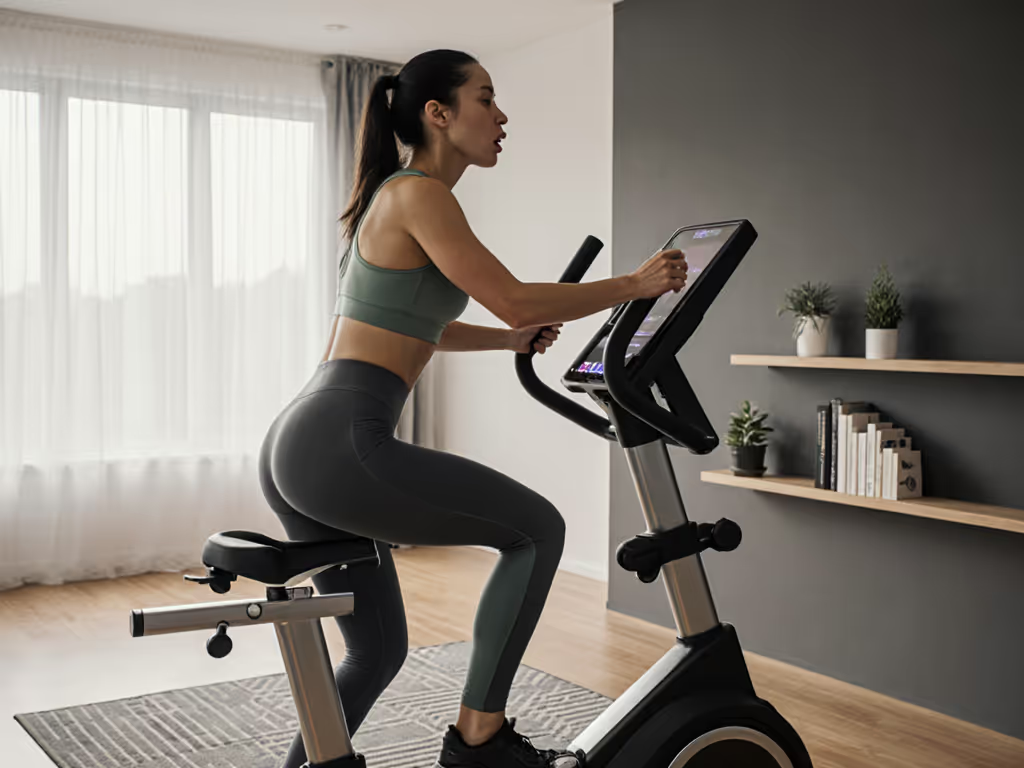
Train smarter, not noisier. For voice professionals (from touring singers to keynote speakers), cardio is non-negotiable endurance fuel. Yet traditional running or cycling often compromises breath control, leaving cords strained and performances inconsistent. Elliptical training offers a solution: low-impact motion that synchronizes with elliptical breathing techniques to build vocal stamina without joint punishment. If you're new to posture and cadence cues, start with our elliptical form guide to protect your voice while you train. This isn't about logging miles; it's about precision breathwork that translates directly to longer phrases, clearer diction, and resilient vocals night after night.
Why Cardio Undermines Traditional Vocal Training (and How to Fix It)
Most cardio accelerates shallow chest breathing, the nemesis of vocal support. When your ribcage heaves, your diaphragm disengages, forcing cords to overwork. The elliptical's fluid stride mimics walking's natural gait while keeping your torso stable. To fine-tune how direction changes affect breathing and support, see our forward vs backward guide. This lets you practice:
- Controlled Resistance Exhalation: Match pedaling resistance to breath pressure. Increase resistance slightly to strengthen diaphragm engagement during sustained notes.
- Tempo-Phrasing Sync: Inhale on the upswing (feet rising), exhale on the downstroke. Time phrases to pedal cycles, e.g., 8-count exhale = 8 pedal strokes.
"Strong, consistent breath support acts as a protective cushion for your vocal cords. The air does the work, so your cords do not have to strain"
4 Foundational Breathing Exercises to Pair with Cardio
Integrate these during your elliptical session:
- Diaphragmatic Hiss Intervals
- Pedal at moderate resistance. Inhale deeply for 4 counts.
- Exhale on a forceful "ssss" for 8+ counts while maintaining stride.
- Why it works: Builds prolonged breath control needed for long phrases.
- Straw Phonation Sprints
- Use a silicone straw. Hum scales through it during high-intensity intervals.
- Focus on steady airflow; back-pressure reduces cord strain while boosting efficiency.
- 4-4-4 Breath Cycling
- Inhale 4 counts, suspend breath 4 counts (keep ribs expanded), exhale 4 counts.
- Gradually increase to 6-6-6 as stamina improves.
- Lip Trill Climbs
- During inclination intervals, perform lip trills (motorboat sound).
- Keeps facial muscles relaxed while air flow stays consistent.
Calibrating Your Machine for Vocal Gains
Adjust your elliptical to prioritize breath training over calorie burn: Curious whether adjustable stride could improve comfort and breath control? Explore our adjustable stride guide.
| Setting | Vocal-Optimized Adjustments | Benefit |
|---|---|---|
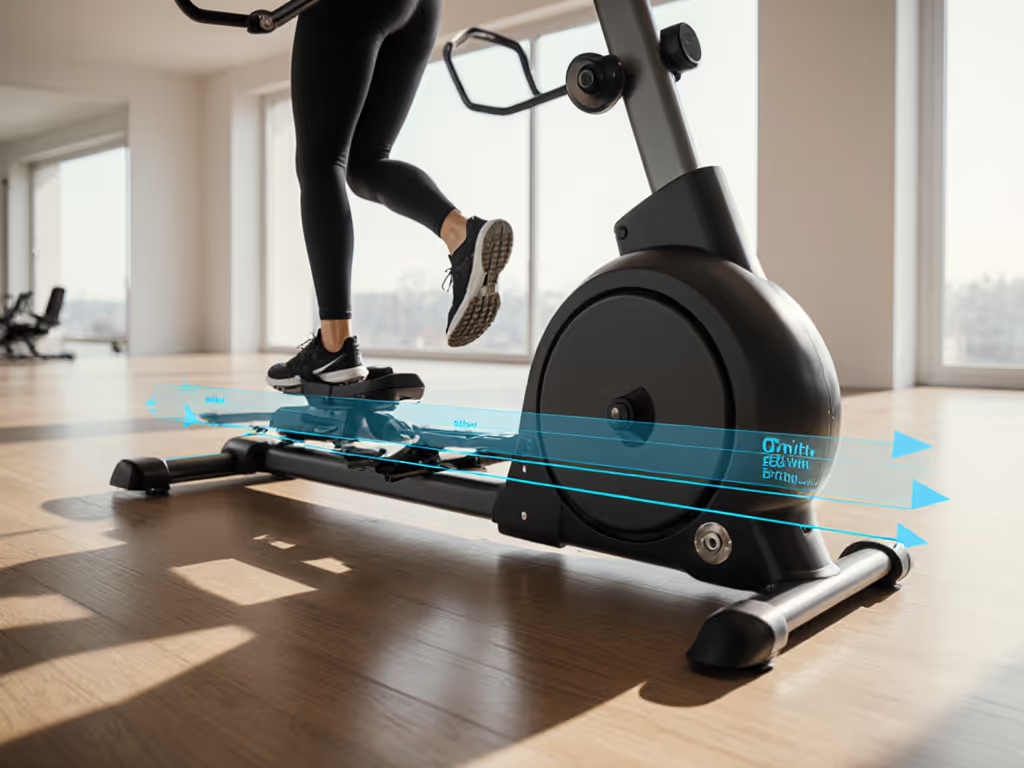
| Stride Length | Match natural walking gait | Prevents ribcage compression |
| Resistance | Moderate, steady tension | Simulates singing against back-pressure |
| Posture | Upright, hands-free | Encourages diaphragm engagement |
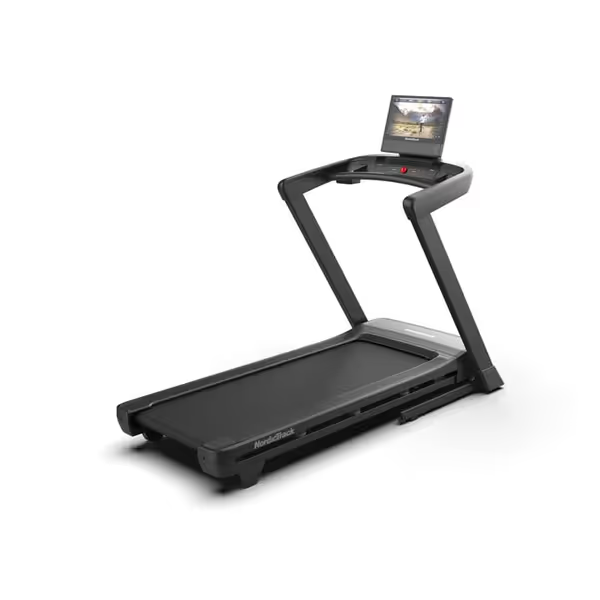
Nordictrack T Series Treadmill
Gym-quality cardio with adaptive workouts and joint-friendly cushioning.
$1499
Incline Range0-12%
Incline Range0-12%
Pros
Adaptive iFIT workouts with auto-adjusting speed/incline.
Adjustable deck cushioning reduces joint impact.
Space-saving foldable design, easy to store.
Cons
Most advanced features require iFIT Pro Membership.
Assembly can be challenging for some users.
Customers find this treadmill to be a solid gym-quality machine with fantastic incline features that go up to 10%, and appreciate its stable construction and ease of use. They consider it well worth the price.
Customers find this treadmill to be a solid gym-quality machine with fantastic incline features that go up to 10%, and appreciate its stable construction and ease of use. They consider it well worth the price.
The Data-Driven Vocalist's Weekly Routine
Commit to 3 sessions/week. For a smarter dashboard of what to log and why, use our elliptical metrics guide. Track progress with:
- Pre/Post Breath Duration: Time a sustained "ah" before/after workout.
- Phrase Length Gains: Note how many extra words you speak/sing per breath.
- Perceived Effort: Rate vocal fatigue on a 1-10 scale pre/post elliptical.
"The true way to safely expand your range is through consistent, gentle breathing exercises"
Why Open Ecosystems Matter for Vocal Athletes
Machines locking metrics behind paywalls sabotage progress. Seek ellipticals broadcasting real-time cadence/resistance via Bluetooth/ANT+ to apps like:
- VoiceBio: Tracks breath capacity and phrase duration.
- Strava: Logs cardio intervals alongside vocal strain scores.
I once lost a week of interval data to a console hiding exports behind a subscription (never again). Voice professionals deserve portable, accurate data to connect cardio gains to stage stamina.
Further Exploration: Tomorrow, time your longest sustained note. Post-elliptical, repeat. Notice the difference? That's your baseline, now build on it.
Related Articles