Elliptical Mindfulness: Sync Your Breath to Cadence
By Zanele Mokoena • 2nd May
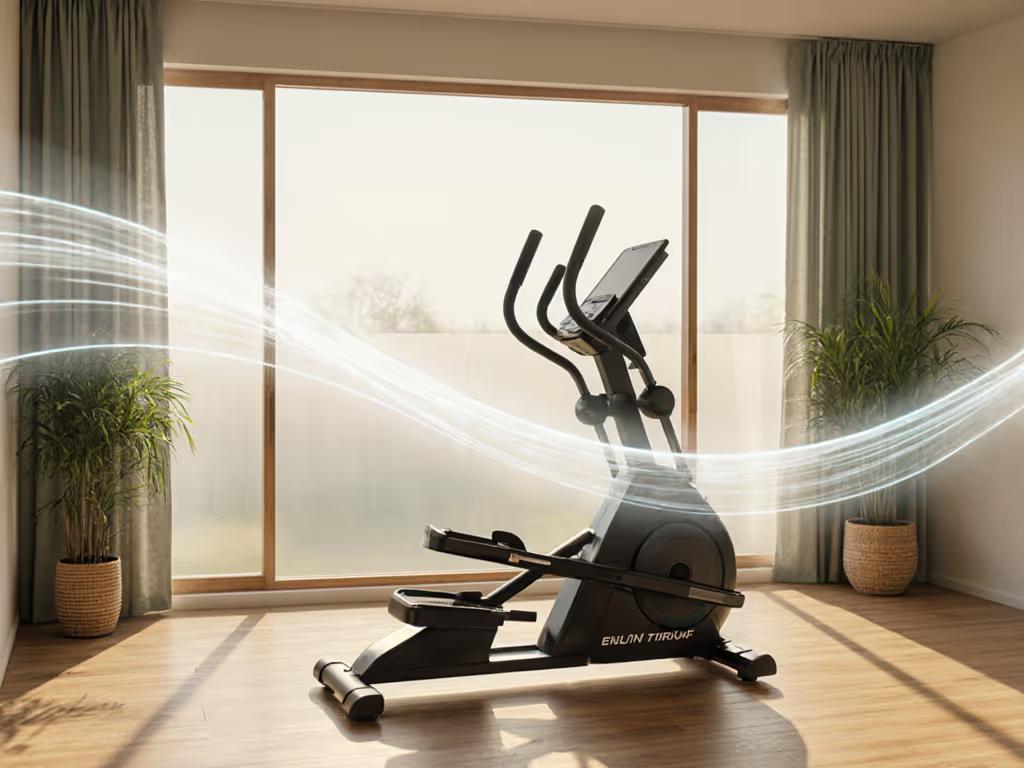
Elliptical mindfulness training isn't about chasing metrics or performance peaks, it's about anchoring your breath to a repeatable rhythm that transforms cardio from noise into a controlled mental practice. The foundation is simple: match your breathing pattern to your elliptical cadence, and you shift from reactive exercise to intentional, meditative work. Below are the questions that unlock this practice, answered with the precision and pragmatism you need to start immediately.
FAQ Deep Dive
What is elliptical mindfulness training, and how does it differ from standard cardio?
Elliptical mindfulness training grounds your cardiovascular work in breath awareness and cadence consistency. Standard cardio often prioritizes intensity, duration, or calorie burn, metrics that pull your attention outward. Mindfulness reframes the session: your elliptical becomes a feedback device for internal rhythm rather than a performance scoreboard.
The difference lies in intention. Traditional cardio workouts ask, "How hard can I push?" Mindful cardio on an elliptical asks, "What rhythm sustains my focus and regulates my nervous system?" This shift matters because it targets adaptability, your ability to sustain effort without strain, rather than peak output. For a science-backed overview of how steady elliptical work supports mood and stress regulation, see our elliptical mental health benefits guide.
Research in exercise physiology confirms that steady-state, rhythmic movement paired with controlled breathing activates the parasympathetic nervous system, reducing cortisol and supporting recovery even during moderate-intensity work. When you sync your breathing to a fixed cadence, you're essentially locking your nervous system into a predictable pattern. That predictability is where the mental clarity emerges.
How do I sync my breathing to cadence on an elliptical?
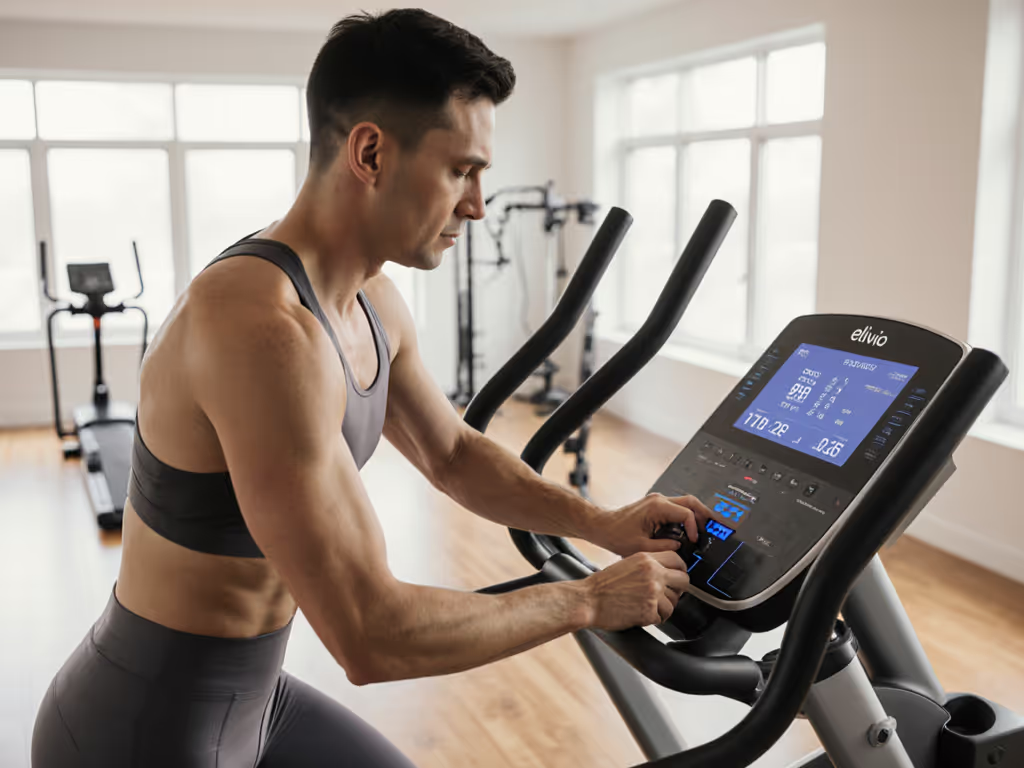
This is a practical skill, not a mystery. Start by measuring your cadence: the number of complete strides per minute. Most ellipticals display this; if yours doesn't, count one leg's push-pull cycle for 15 seconds and multiply by four. If you're unsure which metrics matter for cadence and breath work, our elliptical metrics guide covers SPM, display accuracy, and how to use data without distraction.
Common cadence ranges sit between 120 and 160 strides per minute, depending on leg length, fitness level, and intention. Once you've locked into a steady cadence over 2-3 minutes of warm-up, apply a simple breathing pattern:
- 4-count breath: Inhale for 4 strides, exhale for 4 strides. This works well at cadences around 120-130 SPM and suits stress reduction elliptical workouts where calm is the goal.
- 3-count breath: Inhale for 3 strides, exhale for 3 strides. Cadences of 135-150 SPM pair naturally with this rhythm, keeping effort steady without overexertion.
- 2-count breath: Inhale for 2 strides, exhale for 2 strides. Higher cadences (150-160+ SPM) demand this tighter pattern; it requires focus but prevents breath holding.
The key is matching the pattern to your cadence, not the reverse. Don't force your body into an unnatural rhythm; instead, find the cadence where your chosen breathing pattern flows without conscious strain. This is where tests with repeatable intervals matter: spend one session at 130 SPM with 4-count breathing, another at 145 SPM with 3-count breathing. Note which feels sustainable, where your mind quiets, and where your body resists.
What cadence range is optimal for breath-syncing and mental clarity?
There's no universal optimal cadence, it depends on your biomechanics, leg length, and nervous system response. That said, evidence suggests that moderate cadences (130-150 SPM) create the most stable platform for meditative elliptical practice.
Why? At lower cadences (under 120 SPM), your stride becomes elongated and deliberate; this can feel meditative but may demand more muscular effort per rep, which can trigger tension in the hips or knees if your machine's geometry doesn't suit you. Above 160 SPM, cadence becomes rapid and cognitively demanding, and your focus shifts to keeping up with the pace rather than sinking into breath awareness.
The "sweet zone" for most practitioners falls between 135-150 SPM because it allows a 3-count breathing pattern (inhale-3, exhale-3) without rushed breath or muscular strain. Within that zone, mental clarity tends to peak: your breath stabilizes, your stride becomes rhythmic, and the elliptical becomes almost invisible. You're left with breath, cadence, and thought.
To find your personal optimal cadence, run a 20-minute protocol: spend 5 minutes each at 125, 135, 145, and 155 SPM, each with the corresponding breathing pattern. At which cadence did your mind settle? Where did you feel zero strain in your legs, hips, or lower back? That's your baseline for mindful work.
How does mindful cardio elliptical training reduce stress compared to harder, faster workouts?
The mechanism is neurological, not just psychological. High-intensity work triggers acute sympathetic activation: your body mobilizes for fight-or-flight, which is useful for adaptation but isn't stress-reducing in real time. Rhythmic, moderate-intensity movement paired with controlled breathing engages the vagus nerve, which dampens the sympathetic response and strengthens parasympathetic tone.
A consistent breathing pattern (e.g., 4-in, 4-out at 130 SPM) becomes a biofeedback loop: your steady rhythm trains your nervous system to expect predictability, which lowers vigilance and reduces perceived threat. Over time, this practice durably lowers resting heart rate variability and blunts cortisol spikes from daily stressors.
Beyond neurology, there's a practical benefit: stress reduction elliptical workout sessions create no decision fatigue. You're not choosing intensity, varying resistance, or chasing a target, you're simply matching breath to cadence for a set duration. That lack of novelty, paradoxically, is restful. Your cognitive load drops because the variables are fixed.
Anecdotally, many practitioners report that 20-30 minutes of mindful cadence work feels more restorative than longer, harder sessions. That's because you're not depleting yourself; you're actively downregulating.
What's the relationship between breathing, cadence, and elliptical mental clarity?
Breathing and cadence are not independent. Cadence sets the tempo, and breathing patterns follow it. But the magic lies in the consistency: when cadence and breathing are locked together, your brain enters a state of predictive processing. It anticipates the next breath, the next stride, the next cycle. That anticipation is profoundly calming.
Conversely, when cadence or breathing varies, when your elliptical's resistance drifts or your breath becomes shallow because you're tensing up, the predictive chain breaks. Your brain shifts back into reactive mode, which raises cortisol and dampens focus.
This is why sensor accuracy and app reliability matter, even in a mindfulness context. To minimize dropouts and lag, review our Bluetooth connectivity standards breakdown. If your elliptical's cadence display jumps erratically, or if it lags, you'll lose confidence in your own rhythm. Over multiple sessions, you'll default back to reactive, variable-intensity work because the feedback loop is broken. Train smarter, not noisier: choose equipment for breathing techniques on the elliptical that provides stable, real-time feedback so your brain can lock into rhythm without doubt.
How do I establish a consistent breathing rhythm if my elliptical's metrics are inaccurate or drift?
This is where objectivity becomes essential. First, call out data drift early: use your watch or a separate cadence-detection app to cross-check your elliptical's reported SPM. If the numbers diverge by more than 5%, your machine's sensor is unreliable for mindfulness work.
If drift is confirmed, use a low-tech anchor instead. Set a metronome or a music playlist with a fixed BPM that matches your target cadence. (Cadence in SPM translates to BPM: 140 SPM = 140 BPM.) Listen to the beat and sync your stride and breath to the music, not the machine. This removes the sensor dependency and gives you portable, accurate feedback.
Alternatively, use your own body as the anchor. After three sessions of conscious breath-cadence pairing, most people internalize the rhythm. Your proprioception becomes sensitive enough to detect when you're drifting, allowing you to self-correct without display feedback. This is a skill worth cultivating: it makes you independent of technology.
If your elliptical supports BLE or ANT+ connectivity to a companion app or watch, verify that the connection is stable and that data isn't dropping. For app selection, see our Strava vs Fitbit integration test to choose the platform that logs cadence and heart rate reliably. Open data equals freedom; closed ecosystems limit your progress. Equipment that exports cadence and heart rate to your preferred app without a paywall gives you transparency and portability, which is critical if you ever switch machines or want to cross-reference your breathing data against other training modes.
What's a practical first session structure for someone new to elliptical mindfulness?
Start simple. Warm up at an easy cadence (110-120 SPM) for 3 minutes without focus on breath. Then settle into your target cadence (130-150 SPM, depending on your test result) for 15 minutes, applying your chosen breathing pattern (4-count, 3-count, or 2-count). Finish with a 3-minute cool-down at 110 SPM, allowing breath to naturally slow.
That's it. One session, ~25 minutes total. Repeat this structure 2-3 times per week for two weeks before adding variation. Consistency builds the nervous system adaptation that makes the practice feel effortless; novelty chases novelty and disrupts the feedback loop.
Track only one metric during these early sessions: Did my breathing feel steady? Ignore watts, calories, and distance. This removes performance pressure and anchors your attention where it matters: internal rhythm.
Where to Go From Here
Elliptical mindfulness training is a skill, not a destination. After your first two weeks of consistent 3-count breathing at 140 SPM, explore depth:
- Test longer sessions (25-40 minutes) at the same cadence to assess whether your mind sustains clarity or drifts into distraction.
- Try variable breathing patterns within a single session: start at 4-count (minutes 0-8), shift to 3-count (minutes 8-18), then 2-count (minutes 18-25). Notice how focus sharpens or fatigues at each transition.
- Layer in intention: use your breathing-cadence sync as an anchor for a specific mental focus (e.g., naming one thing you're grateful for with each exhale).
- Cross-check your at-home elliptical data against wearable devices or apps you already use, ensuring it lists supported protocols plainly so future equipment choices prioritize open connectivity.
- Document your subjective response: mood, sleep quality, and resting heart rate before and after a month of practice. Personal data often reveals patterns that fitness apps miss.
The path forward is exploration grounded in your own observation, not external performance benchmarks. Your nervous system knows what works; your job is to listen, measure accurately, and refine the variables you control.
Related Articles