Q-Factor vs. Stride Length: Your Elliptical Fit Guide
By Amir Qureshi • 31st Mar
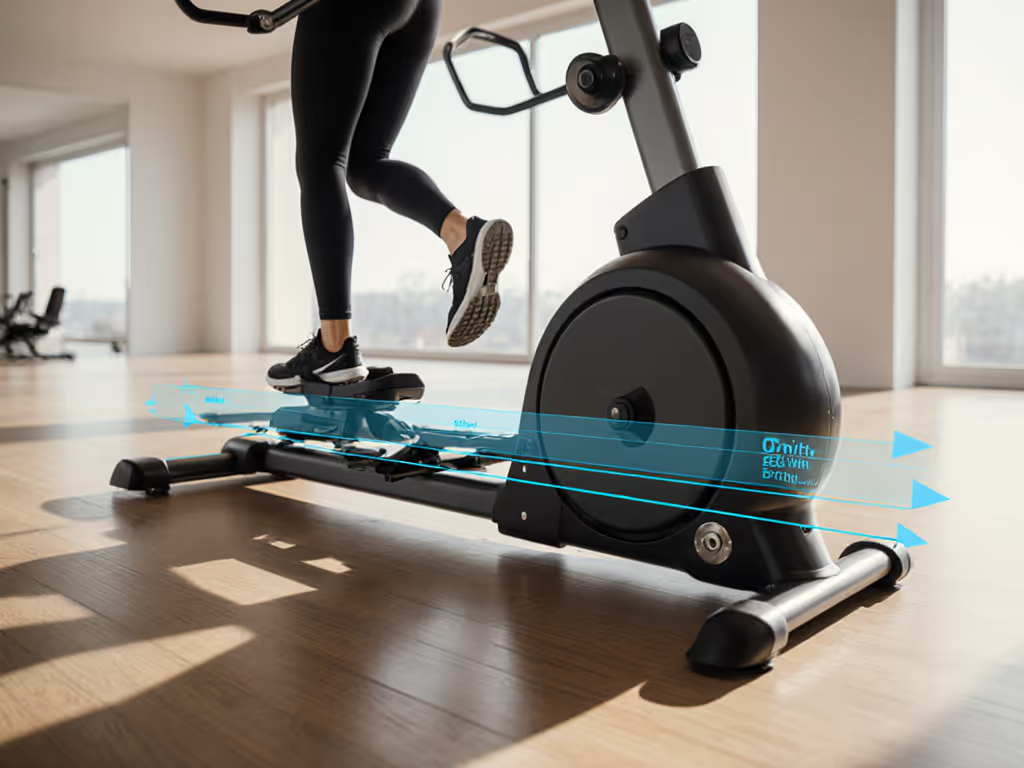
Choosing an elliptical means understanding two fundamental measurements that determine whether the machine feels natural or causes discomfort: elliptical Q-factor and stride length. These aren't marketing specs to ignore; they're biomechanical anchors that decide if your knees, hips, and ankles move freely or spend every session fighting the machine's geometry. This guide cuts through confusion and gives you the objective tests to find your fit without guesswork.
What Exactly Is Q-Factor, and Why Does It Matter?
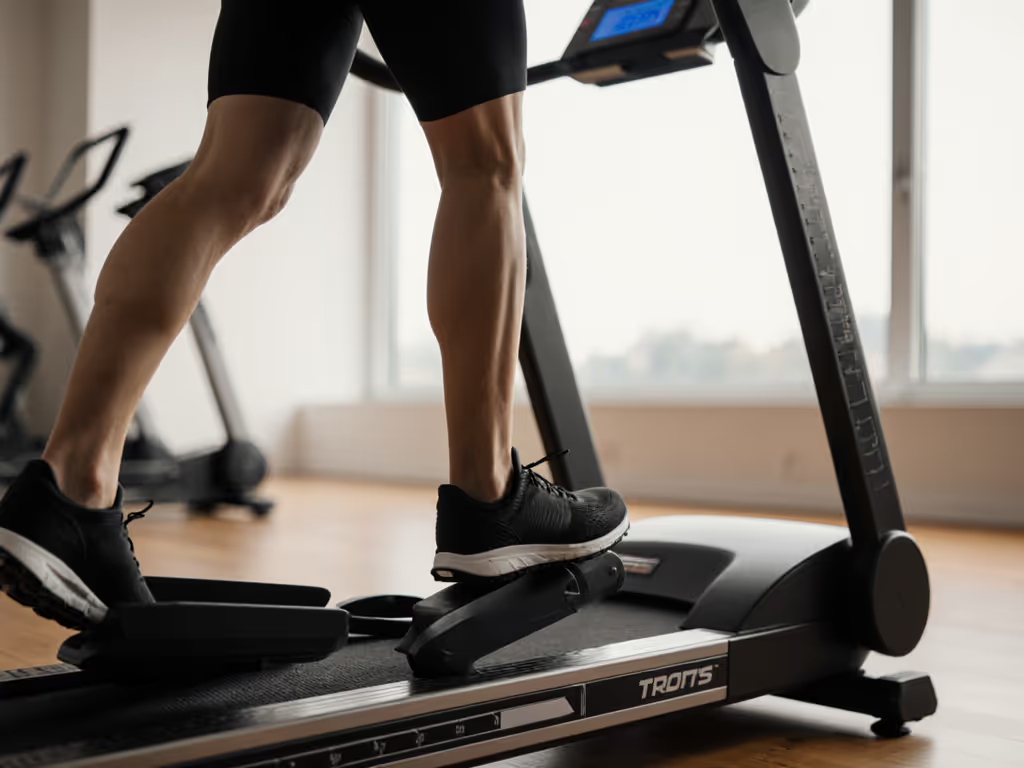
Q-factor is the distance between the pedals measured from center to center, perpendicular to the direction of travel. Think of it as how wide your pedal stance is. A narrower Q-factor (40-50 mm) pulls your feet closer together and mimics a natural running gait. A wider Q-factor (55-70 mm) spreads your feet outward, which can stress your knees and hips if your hip width doesn't match.
Many shoppers skip this detail entirely because it sounds technical. For a deeper technical breakdown of how these measurements interact, see our stride length vs Q-factor explainer. In truth, it's the single biggest driver of knee comfort, second only to overall stride length match. A machine with a narrow, fixed Q-factor that doesn't suit your hip geometry will produce a persistent twinge or pinch within weeks, even if everything else is "adjustable".
How Does Stride Length Relate to Q-Factor?
Stride length describes the forward-and-backward range your feet travel during a full elliptical revolution. Typical ranges are 16-22 inches. Stride length is determined by your inseam and leg length; it should feel like a natural walking or running cadence, not a shuffle or an exaggerated lunge.
Q-factor and stride length are independent. You can have a long stride with a narrow Q-factor, or a shorter stride with a wider Q-factor. Both measurements must match your body independently. This is why a machine that works beautifully for your taller partner may feel cramped or awkward for you, it's not just stride length; it's the combination of stride and pedal width.
How Do I Measure My Own Stride Length and Ideal Q-Factor?
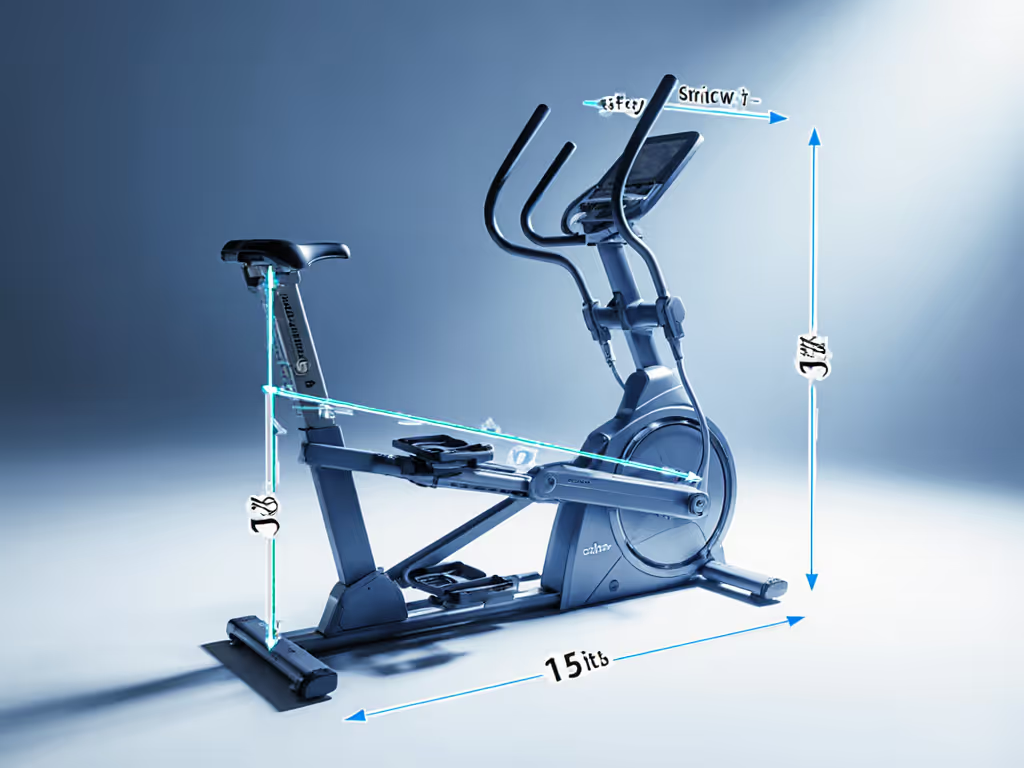
Stride length starts with your inseam. Stand barefoot with your back against a wall. Tape a book or block between your legs at a comfortable height, as if you were sitting on a saddle. Measure from the floor to the top of the block. This is your inseam, and it's your baseline. Use our stride calibration guide to translate inseam into dialed-in machine settings and showroom tests.
Elliptical stride lengths typically fall 4-8 inches shorter than your inseam, depending on the machine's slope and pedal path geometry. As a rule of thumb:
- Inseam 28-30 inches -> target stride 18-20 inches
- Inseam 30-32 inches -> target stride 20-22 inches
- Inseam 25-27 inches -> target stride 16-18 inches
For Q-factor, measure your hip width. Standing in light athletic shorts or leggings, mark the outside of each hip bone with a pen. Measure the distance between the marks. This is your hip width. In general:
- Hip width below 13 inches -> narrow Q-factor (40-50 mm) is comfortable
- Hip width 13-15 inches -> medium Q-factor (50-60 mm) feels natural
- Hip width above 15 inches -> wider Q-factor (60-70 mm) accommodates your stance
The key is that your knees should track directly over your midfoot without caving inward (valgus stress) or splaying outward. If it hurts, it's wrong, and misalignment is often the cause.
What's the Difference Between a Fixed and Adjustable Q-Factor?
Most consumer ellipticals have a fixed Q-factor, which is set at manufacture. This saves cost but locks you into one pedal width. If the machine's Q-factor is 60 mm and your optimal range is 45 mm, you'll feel a constant outward pull on your knees by week two.
Some premium or commercial ellipticals offer adjustable Q-factor through modular pedal arms or pedal spacers, a much rarer feature but invaluable for multi-user households. If multiple people will use one machine, our multi-user elliptical picks highlight models that adapt quickly between body types. Adjustability lets you swap or reposition pedal arms to narrow or widen the stance by 5-15 mm, accommodating both partners or family members with different hip widths.
If you're shopping as a couple with significantly different body shapes, prioritize machines explicitly marketing adjustable pedal geometry. Fixed-Q machines can still work, but your comfort margins shrink.
Why Did I Find One Machine Comfortable and Another Choppy?
You've likely experienced a stride mismatch. A machine with a 16-inch stride when you need 20 inches forces you to "shuffle"; your hips rock side to side, your lower back works overtime, and your knees flex at an odd angle mid-stride. Conversely, an overly long stride of 22 inches on a shorter frame creates an exaggerated lunge that strains your hip flexors and glutes.
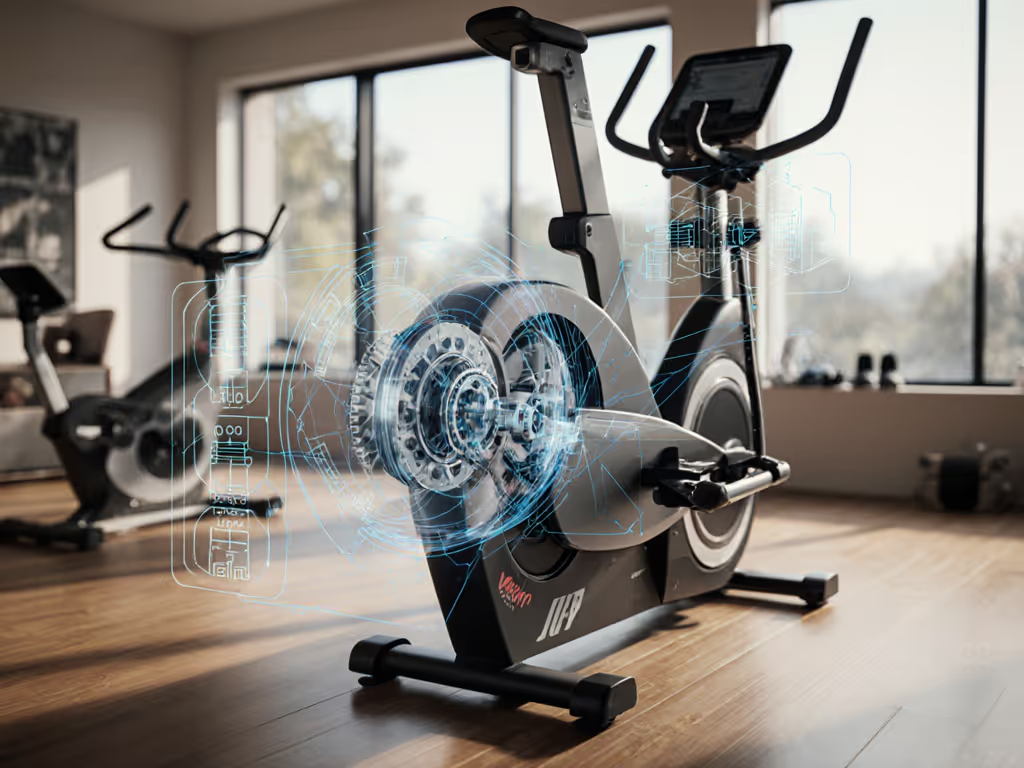
The choppiness or clunkiness you felt was also partly Q-factor conflict. Drive system matters too; compare our drive mechanics comparison to understand why some machines feel smoother for your gait. If the pedals are set too wide, each step feels like you're spreading your legs apart; too narrow, and they pinch your knees inward. Neither gives you that smooth, flowing sensation of a natural gait.
After a stretch of irregular training that left my knees sore, I taped my living room floor and marked my natural stride arc while walking heel-to-toe. Then I tested several machines at a showroom using that specific reach. A 20-inch stride with a 48 mm Q-factor immediately felt different, no pinch, no shuffle, and within a week of consistent use, the discomfort vanished. Since then, I start every recommendation with body measurements before brand names. Measure your stride once; choose comfort for every workout.
Can I Adjust Stride Length or Q-Factor After Purchase?
Stride length is largely fixed by the machine's elliptical path and suspension design. You cannot meaningfully lengthen or shorten it with adjustments or add-ons. This is why buying a machine with the correct initial stride length is non-negotiable.
Q-factor has limited adjustment options on most machines. Some allow you to:
- Move the entire pedal assembly slightly inward or outward (a fraction of an inch, if the frame tolerates it)
- Use custom insoles or foot spacers to shift foot position micro-adjustments of 5-10 mm
- Add or remove pedal spacer shims, if the manufacturer offers them
These tweaks help fine-tune comfort by a small margin but won't fix a fundamentally mismatched Q-factor. If your hip width is 14 inches and the machine has a 65 mm Q-factor, no insole will resolve that structural conflict.
Should Q-Factor Be My Primary Buying Decision?
No: stride length is the primary anchor. Stride mismatch is the most common cause of early buyer regret and return. Nail stride length first, then confirm Q-factor aligns with your hip geometry. Both must support your comfort; neither should be an afterthought.
When you're comparing machines, rank them this way:
- Stride length matches your inseam-derived target
- Q-factor sits within your hip-width comfort band
- Step-up height, handle reach, and ceiling clearance work for your space
- Noise, drive type, and warranty suit your household and timeline
What If My Partner and I Have Very Different Body Shapes?
This is a real constraint. One person with a 28-inch inseam and a 12-inch hip width, and another with a 34-inch inseam and 15-inch hip width, have fundamentally different biomechanical needs. A single fixed-Q, single-stride machine will compromise at least one user.
Your options:
- Prioritize adjustable Q-factor machines that allow pedal-width tuning
- Choose a machine with a longer stride (20-22 inches) and medium Q-factor (50-55 mm) that splits the difference, not ideal for either, but usable
- Accept that the shorter or narrower user will feel slight discomfort or compromise their comfort for the sake of household cost
- Plan for two machines if budget and space allow
Many couples choose option two or three pragmatically, understanding that perfect bilateral comfort is rare in shared equipment.
Summary and Final Verdict
Q-factor and stride length are not interchangeable, and both matter. Stride length determines your forward reach and cadence feel; Q-factor determines whether your knees and hips track safely. Confusing them or ignoring either one is a fast path to regret.
Before shopping, tape-measure your inseam and hip width. Test machines at showrooms using those numbers as a filter. Ask sales staff or product support for exact stride and Q-factor specs in millimeters; if they can't provide them, that's a red flag. When you're ready to compare models, our first-time buyer's guide walks you through features that matter and common pitfalls to avoid. When you sit on a machine, your knees should feel naturally positioned over your midfoot, your stride should feel like your natural walking rhythm, and your first thought should be comfort, not adjustment.
A machine that fits from day one doesn't require a long onboarding period. You'll train consistently, build habit, and avoid the regret of a $1,500 piece of equipment that never feels quite right. Measure your stride once; choose comfort for every workout. That discipline at the start pays dividends for years.
Related Articles