
Elliptical Stride Length Adjustment by Height
By Amir Qureshi • 19th Mar
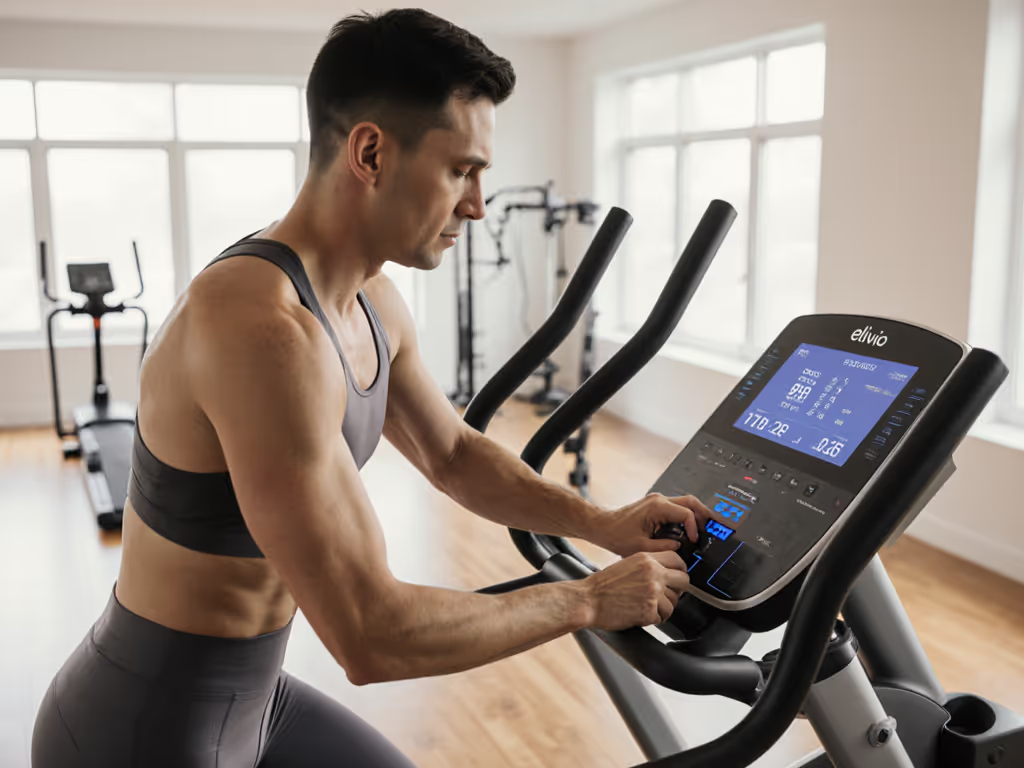
Your elliptical won't work for your body unless your stride matches your frame. Elliptical stride length adjustment isn't a trivial spec, it is the foundation of comfort, efficiency, and injury prevention on any machine. Yet most shoppers glance at a number, assume "20 inches fits everyone," and regret it within weeks. The truth is simple: stride is personal, measurable, and non-negotiable for pain-free workouts.
This guide translates height, inseam, and machine geometry into actionable fit decisions so you can eliminate guesswork before you buy, or optimize what you already own.
What Is Stride Length, and Why Does It Matter?
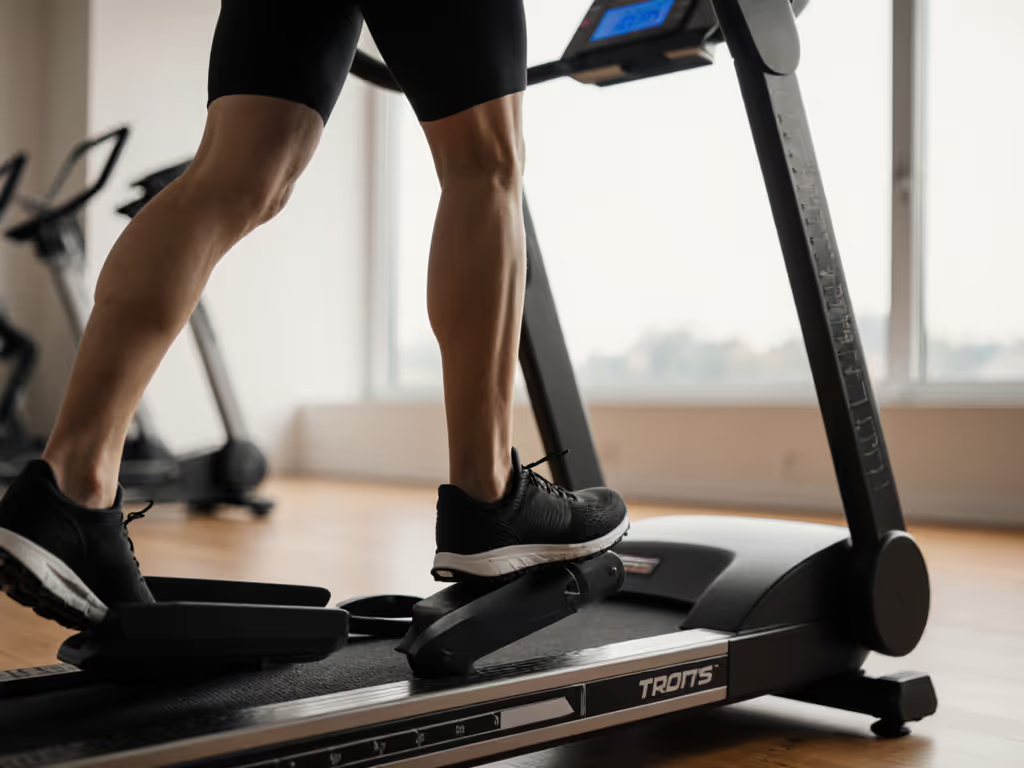
Stride length on an elliptical is the distance your foot travels from the farthest back pedal position to the farthest forward position during one complete rotation. It's not arbitrary; it directly shapes how your knees, hips, and ankles stack during effort.
When stride length matches your leg length and natural gait, three things happen:
- Efficiency improves. Longer, natural strides cover more ground per rotation, reducing choppy micro-adjustments that waste energy.
- Joint load distributes evenly. Misaligned stride forces knees and hips into compensation patterns that trigger pinching or soreness over time.
- Muscle activation balances. Research shows longer stride lengths promote greater glute engagement, which supports hip stability and reduces lower-back stress.
Conversely, a stride that's too short feels cramped; a stride that's too long forces you to overreach, straining hips and knees. After a winter of knee twinges from mismatched equipment, I learned the hard way: the machine must adapt to your body, not the reverse. A simple tape-measure test (wall-to-toe stride reach) revealed I needed a 20-inch stride and a narrower pedal spacing. One swap, one week of adjustment, and the pinch vanished.
Measure, don't guess. For step-by-step measurements and setup, follow our stride length calibration guide.
How Do You Match Stride Length to Your Height?
Height is a starting reference, but inseam (the distance from your inner thigh to your heel, seated) is the real predictor. Most people overestimate inseam; measure accurately by sitting upright against a wall and having someone place a book at your crotch, then measuring from the book to the floor. That's your true inseam.
Here's the mapping:
| Your Height | Inseam (Approx.) | Optimal Stride Length |
|---|---|---|
| Under 5'0" | <28" | 11" - 14" |
| 5'0" - 5'3" | 28" - 30" | 14" - 16" |
| 5'4" - 5'8" | 30" - 32" | 16" - 20" |
| 5'9" - 6'0" | 32" - 34" | 18" - 20" |
| Over 6'0" | 34"+ | 20"+ |
Keep in mind: within each height band, leg lengths vary by 1-2 inches. A 5'6" person with shorter legs may prefer 16 inches; another 5'6" person with longer legs may need 19 inches. Use the chart as a floor, not a ceiling. If you're over 6 feet tall, our best ellipticals for tall people shortlist explains which models offer truly long, comfortable strides.
Red flag: If you're between ranges, size up rather than down. A stride that's 1-2 inches longer feels natural; a stride that's too short leaves you feeling cramped and wanting more.
What About Multi-User Fit?
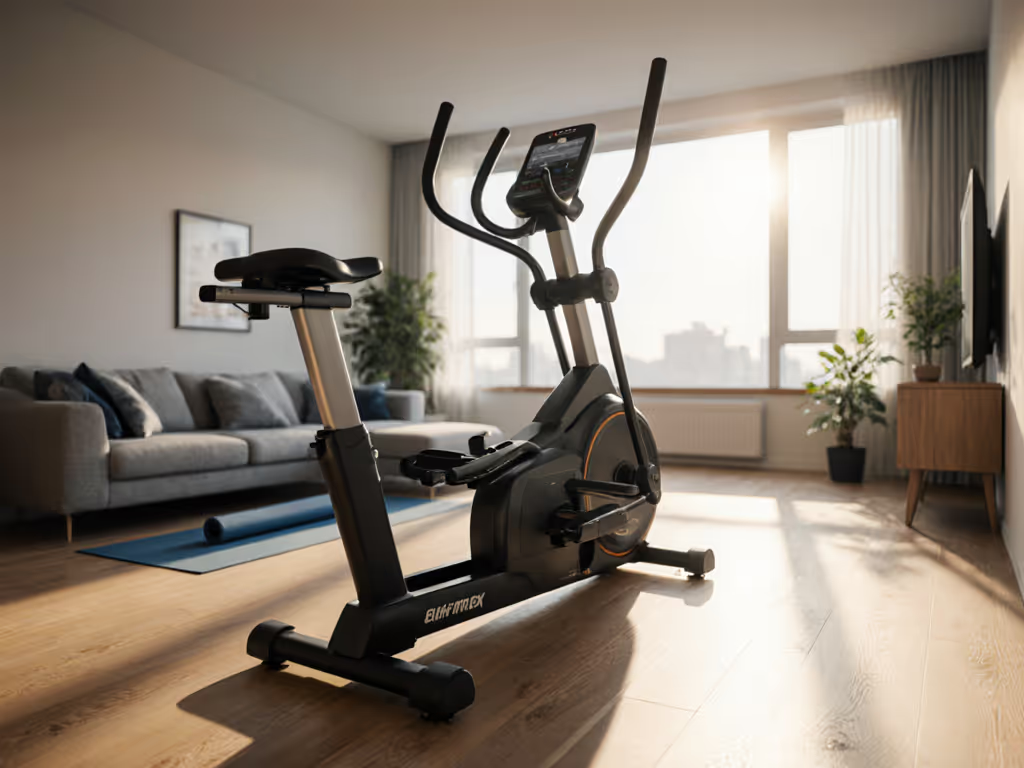
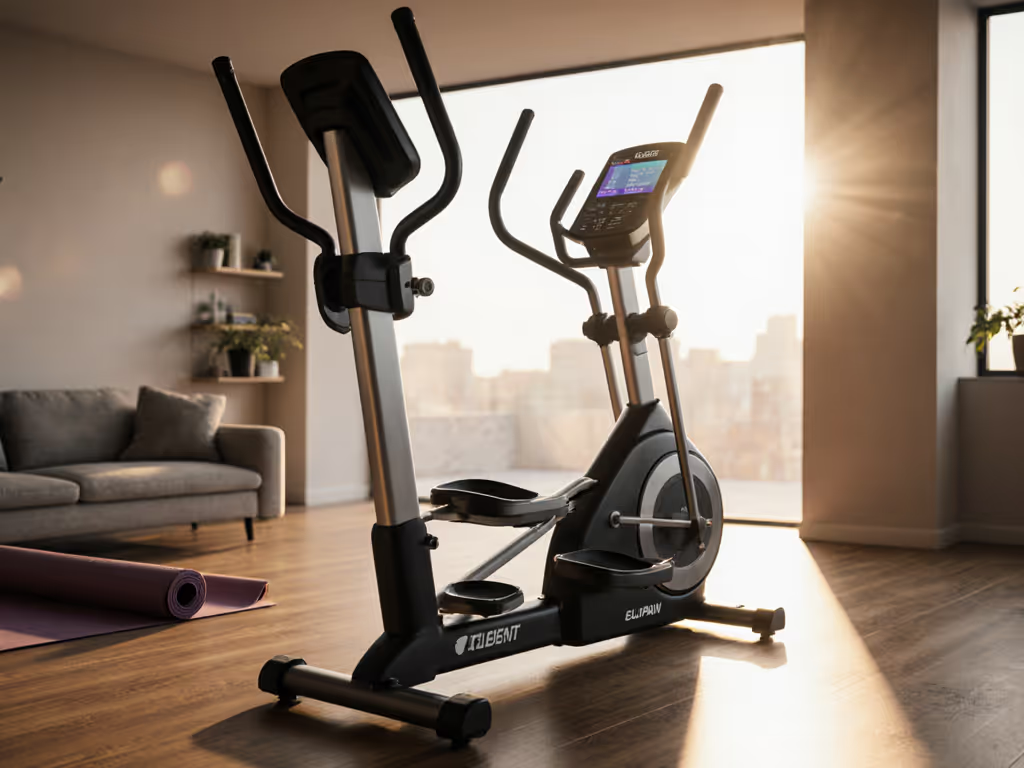
If you and a partner have different heights (say, 5'4" and 5'10"), you need an elliptical with adjustable stride length. Fixed machines force one user into discomfort. For a complete overview of how adjustable stride technology works—and who benefits—see our adjustable stride elliptical guide.
Adjustable models use two methods:
- Power adjustment: Press a console button to raise or lower the ramp, which shifts pedal arc length. Fastest, most seamless for switching users.
- Manual adjustment: Turn knobs, slide brackets, or pivot arms to change stride. Slower but common on mid-range machines.
For couples with a 3-4 inch height gap, manual adjustment is workable if both users commit to resetting before each session. For frequent swaps (daily or every other day), power adjustment saves friction. Test the adjustment mechanism in-store or read user reviews to confirm smoothness and reliability; stiff or fiddly adjusters discourage actual use.
How Do You Optimize Stride Length in Your Current Machine?
If you own an elliptical and suspect your stride is off, run this test:
- Stand on the machine with feet on pedals at the back position. Your knee should be almost straight but not locked (roughly 25° bend).
- Move to the front pedal position. Your knee should flex to about 90°.
- Check the feel. Does it feel natural, or cramped? Do you overshoot or undershoot?
If the machine has adjustable stride, locate your model's adjustment mechanism (usually a knob, bracket, or console button), and refer to the manual for exact steps. Adjust both sides to the same length to ensure symmetrical motion. Then test at a comfortable cadence (around 120 steps per minute) for 5 minutes. Small refinements are often needed; changes are trial-and-error.
If your machine has fixed stride and the fit feels wrong, consult the spec sheet for exact length. If it's 2 inches shorter than your ideal range, the machine may not suit your biomechanics long-term; consider renting or borrowing an adjustable model to confirm the difference matters before reinvesting.
What's the Relationship Between Stride Length and Q-Factor?
Q-factor (the distance between pedal centerlines) is separate from stride length but equally important for comfort. For a deeper breakdown of stride length vs Q-factor and how to measure both, see our stride length vs Q-factor guide. A wider Q-factor forces your knees outward; a narrower Q-factor stacks knees more naturally above ankles. Stride length and Q-factor interact: a long stride with a wide Q-factor can amplify hip and knee stress, while a long stride with a narrow Q-factor distributes load smoothly.
When evaluating machines, don't optimize stride in isolation. Ask: What's the Q-factor? Can it be adjusted? For users with knee sensitivity, an 18-20 inch stride paired with a narrow Q-factor (typically under 10 inches) outperforms a 20-inch stride with a wide Q-factor.
How Do You Test Stride Length Before Buying?
Whenever possible, test the machine in-store for at least 5-10 minutes at a moderate, steady cadence. Don't just walk through a demo; actually exercise. Notice:
- Knee position. Does your knee track over your toes, or does it drift inward or outward?
- Hip comfort. Any pinch or tightness in the front of the hip?
- Ankle angle. Do your feet feel locked in, or can they pivot slightly with the pedal?
- Lower back. Does the machine encourage a neutral spine, or do you feel pressure in your lower back?
If an online purchase is your only option, check the machine's stride specification against your inseam, read verified user reviews from people your height, and confirm the return policy window is at least 30 days (long enough to trial at home).
Final Verdict
Stride length adjustment by height is not cosmetic; it's biomechanical. A 20-inch stride calibrated for most users suits people 5'3" to 6' reasonably well, but "reasonably" masks misalignment for many. The instant you step on a mismatched stride, your knees, hips, and lower back know. You'll adapt for a few weeks, then pain whispers, motivation falters, and the machine becomes furniture.
Start here: measure your inseam, cross-reference the height table, then locate machines in your optimal range. If multi-user fit is a factor, prioritize adjustability. Before committing, test in-store or secure a flexible return policy. Within a week of consistent use on a properly fit machine, you'll notice the difference: smoother movement, longer effort windows, and absence of that nagging joint sensation.
Stride length is one of the few variables you control before the money changes hands. Treat it as a primary decision, not an afterthought. Measure once; choose comfort for every workout.
Related Articles