Pain Management Ellipticals: Vibration vs. Heat
By Amir Qureshi • 12th Apr
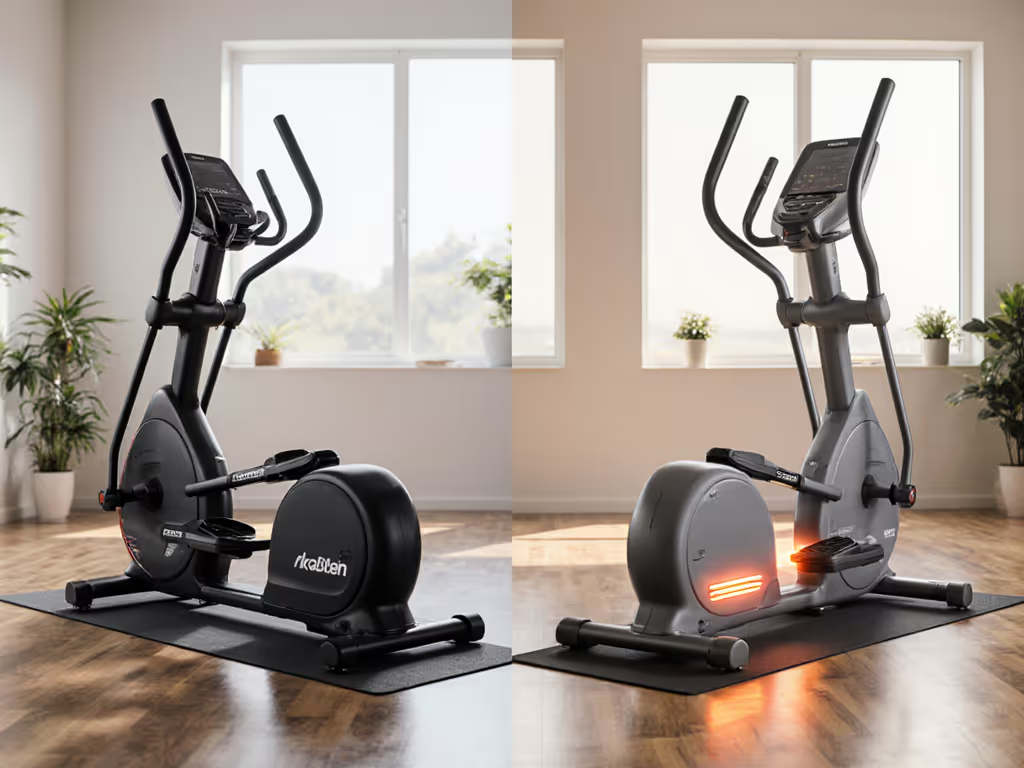
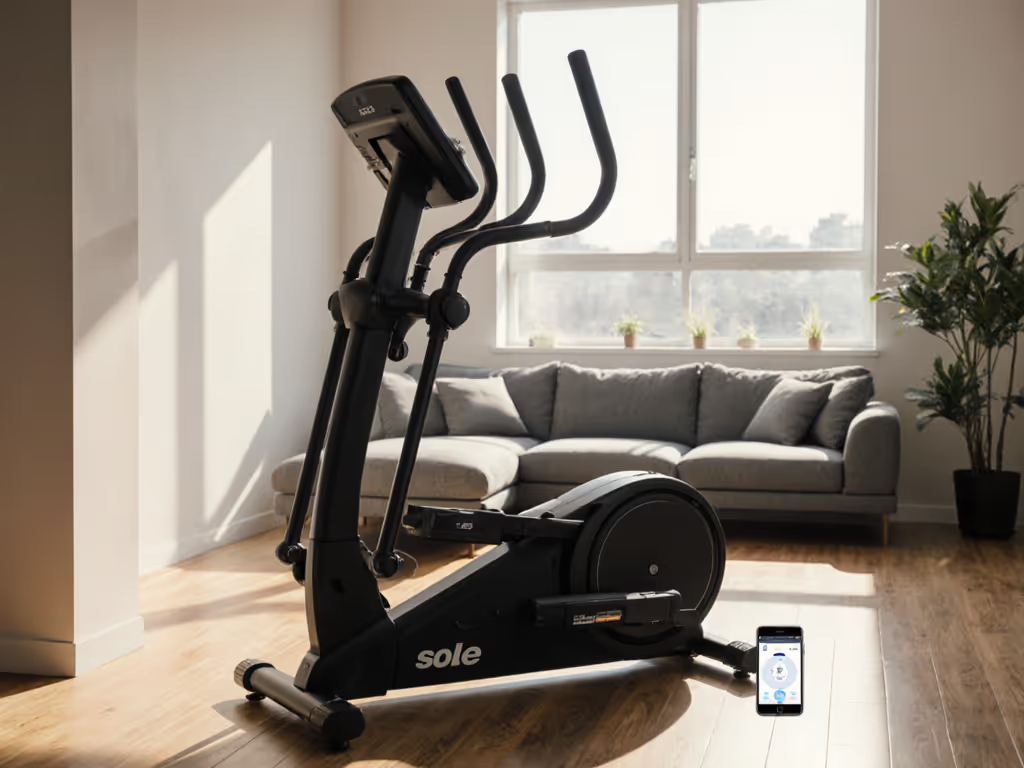
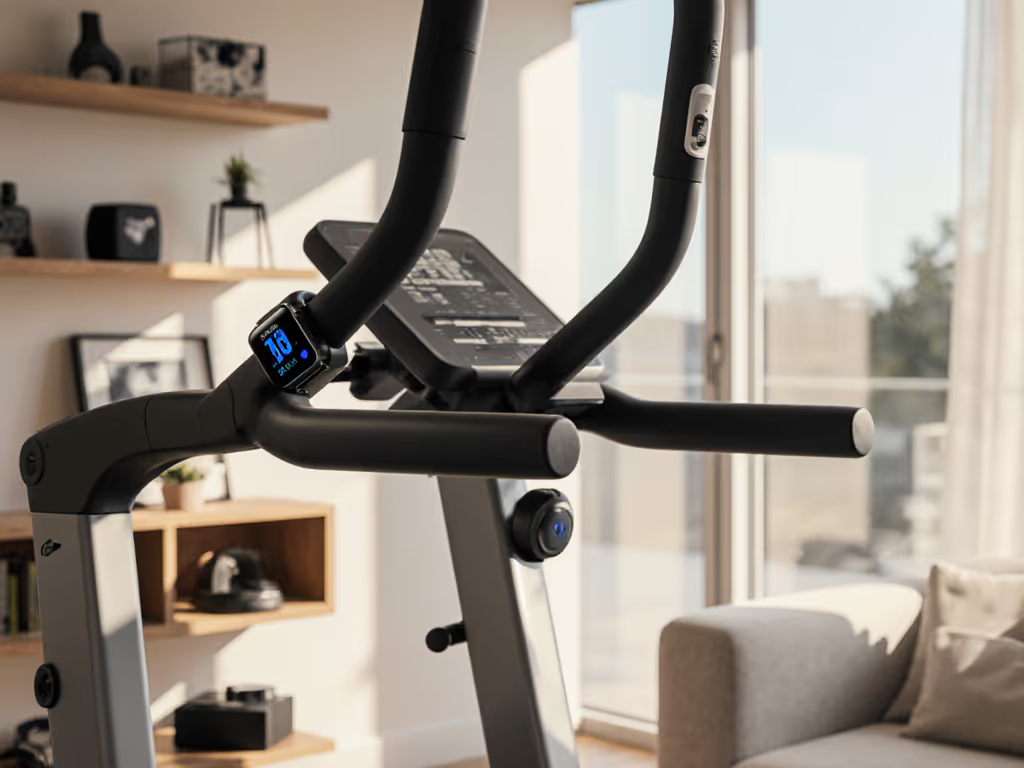
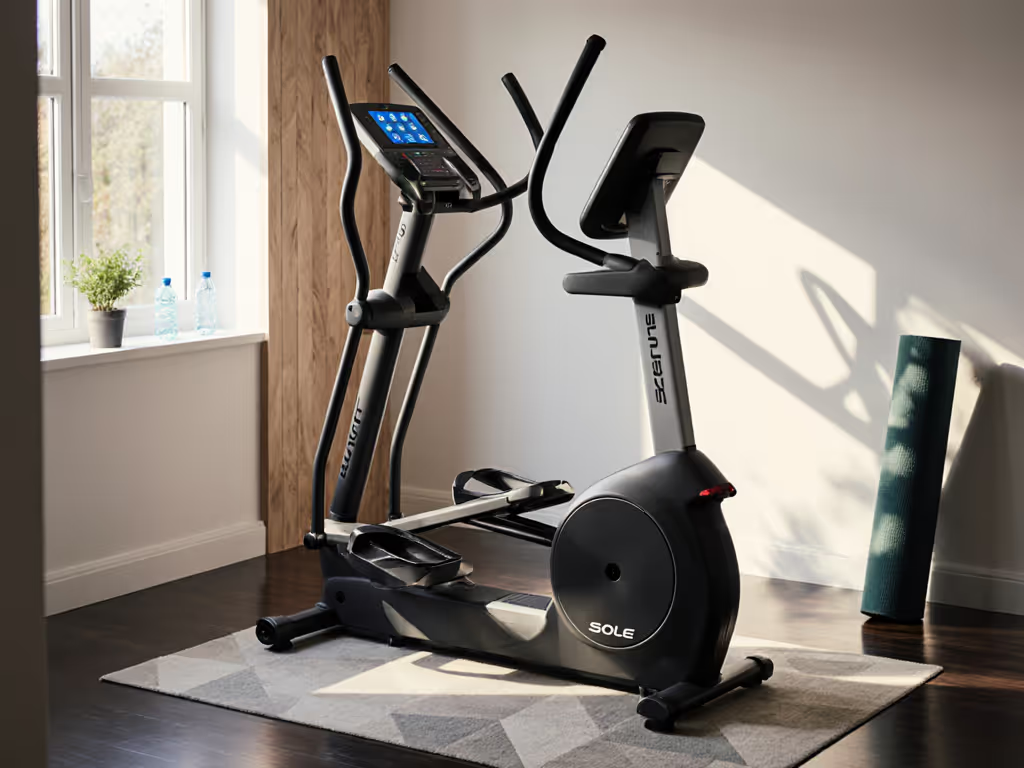
When you're managing chronic pain or recovering from injury, every machine feature feels like it could be the answer. Pain management elliptical comparison debates often circle around vibration therapy ellipticals and heat zone ellipticals, but here's what I've learned after years helping people dial in their setup: the foundation matters far more than the accessories. Your recovery-focused elliptical features start with stride mechanics and alignment, not buzzwords.
I'm going to walk you through the questions I hear most, and give you the measurement-backed clarity that cuts through the noise.
FAQ: Pain Management Ellipticals and Recovery-Focused Design
Q: Should I choose a vibration therapy elliptical or a heat zone elliptical for pain relief?
Let me be direct: neither vibration nor heat is a substitute for proper elliptical trainer geometry. Both are secondary features, and they shouldn't drive your machine choice. Here's why.
An elliptical's primary job is to offer low-impact movement that protects your joints while you strengthen the muscles that support them[1][4]. Research published in the National Library of Medicine shows that after four weeks of three-times-weekly elliptical workouts, participants with chronic low back pain experienced significant reductions in pain and disability scores, achieved through consistent, aligned movement, not peripheral features[6].
Vibration and heat can feel nice during recovery, and some users report mild comfort benefits. But if your stride is 2 inches too short, your Q-factor (the space between your feet on the pedals) is too wide, or your foot angle forces your knees inward, no vibration setting or heating zone will fix the underlying problem. If it hurts, it's wrong.
Focus first on mechanics. Secondary features come after. For a quick primer on getting these basics right, see our Stride Length vs Q-Factor fit guide.
Q: What makes a recovery-focused elliptical different from a standard gym machine?
Recovery-focused elliptical features prioritize three things:
- Adjustable Stride Length (18-22 inches is typical range)
- Narrow Q-Factor (ideally under 10 inches apart at the pedal contact point)
- Smooth, Predictable Resistance (no sudden spikes that jar your joints)
The low-impact advantage of an elliptical comes from the fact that both feet stay in contact with the pedals throughout the entire motion[7]. This continuous contact (unlike running, where one foot leaves the ground) distributes your body weight evenly and eliminates the jarring impact that can aggravate knee, hip, or back pain.
When you're recovering from pain, every detail of this gliding motion matters. I learned this the hard way during a winter of knee twinges. I taped my living room floor and tested stride reach with a simple wall-to-toe drill, then swapped to a 20-inch stride with a narrower Q-factor. Within a week, the pinch was gone. Since then, I start every recommendation with body measurements before brand names.
Measure your stride once; choose comfort for every workout. Use our Stride Length Calibration guide to dial in your exact measurement before you shop.
Q: How does stride length affect chronic pain relief on an elliptical?
Stride length is non-negotiable for pain management. Here's the threshold logic:
Your inseam ÷ 2.5 = approximate ideal stride length. If your inseam is 32 inches, aim for a 12.8-inch stride; if it's 30 inches, aim for 12 inches. However, most home machines offer 18-22 inches to mimic a running gait, which is actually better for cardio and joint engagement than shorter strides.
What matters most: the machine you choose must accommodate your measurement. A stride that's too short forces you to take choppy, inefficient steps, increasing stress on your knees and lower back. A stride that's too long overstretches your hip flexors and lumbar spine.
When your stride aligns with your body, the elliptical engages your quadriceps, hamstrings, glutes, and calves in a balanced way[1], which strengthens the muscles that stabilize both your knees and lower back. This muscular support is what reduces pain over weeks and months, not a one-time vibration session. To reinforce alignment while you move, review our Elliptical Form Secrets.
Q: Can heat or vibration replace core strengthening?
No. A heat zone might soothe muscle tension temporarily, and vibration might feel pleasant, but they do not strengthen your core or improve spinal stability.
Ellipticals that encourage an upright posture (without relying on handle support) naturally engage your core[1]. This gentle, continuous core activation is what relieves back pain by reducing pressure on your lower back and improving spinal alignment. Over time, this core engagement improves your posture during daily life, reducing the likelihood of re-injury.
Heat and vibration are comforts. Core strength is the foundation.
Q: What's the real-world difference between machines marketed with vibration therapy vs. those without?
Honestly? If the stride, Q-factor, and drive quality are equal, the difference is minimal. A well-designed elliptical without vibration will outperform a poorly aligned one with it.
Here's what vibration can do: some users report it helps trigger muscle activation or provides psychological comfort during recovery. But this is not the same as addressing misalignment. If your pedals are positioned too wide apart (Q-factor too large), vibration won't correct your knee angle. If your stride is too short, vibration won't give you room to move comfortably.
When comparing machines, ask:
- What is the exact stride length in inches?
- What is the Q-factor (pedal spacing)?
- Is the foot angle neutral, or does it angle inward?
- How smooth is the resistance curve from low to high? If you’re comparing resistance feel, our magnetic vs air resistance comparison explains which systems stay smooth for sensitive joints.
Vibration specs are secondary.
Q: Are heat features on ellipticals backed by research for pain management?
Heat therapy in general has established benefits: it increases blood flow, reduces muscle tension, and can ease stiffness. But localized heat zones on an elliptical machine are not a standard clinical pain-management tool, and I haven't found substantial peer-reviewed research comparing heat-enabled ellipticals to non-heated ones for chronic pain relief.
The peer-reviewed evidence for elliptical pain management centers on low-impact movement quality and consistent, strength-building use[1][6], not on accessory heating.
If you enjoy a heated seat or handle during your session, it's a nice-to-have. But don't let it drive your decision if the machine's core alignment doesn't fit your body.
Q: How do I know if an elliptical is truly recovery-focused?
Ask these questions:
- Is stride length adjustable or fixed? (Adjustable is better for multi-user households.)
- What is the Q-factor? (Narrower is gentler on knees; aim for under 10 inches.)
- Can you adjust ramp (incline) and resistance independently? (This lets you tailor intensity without creating impact.)
- Does the manual or spec sheet list exact measurements? (Vague language is a red flag.)
- What is the flywheel weight and drive type? (Heavier flywheels and center-drive designs tend to feel smoother.) Learn why flywheel weight matters for pain-free, consistent momentum.
- Is there a trial period or return window? (You need time to assess comfort.)
Machines marketed as "pain-free" or "joint-friendly" should be willing to back up those claims with exact specs, not marketing language.
Q: What if I have pain in multiple areas, back, knees, and hips?
This is common, and here's the good news: a well-aligned elliptical works for multi-site pain because it addresses the root cause (weak supportive muscles and poor biomechanics), rather than treating symptoms.
When you use an elliptical with a stride and Q-factor that match your body, you strengthen your glutes, quadriceps, hamstrings, and core all at once[1]. These muscle groups support your entire lower chain: knees, hips, and lower back. As they get stronger, they take stress off all three areas simultaneously.
The key is consistency. The study I mentioned earlier showed significant improvement after four weeks of regular use[6]. You're not looking for instant relief; you're building a base of muscular support that reduces pain over time.
Q: Should vibration vs. heat influence my budget?
Not primarily. A $900 elliptical with poor stride fit and a wide Q-factor is a poor investment, even if it has vibration. A $1,200 elliptical with a measured 20-inch stride, narrow Q-factor, and smooth resistance is a better value.
If you have budget left over after getting the mechanical basics right, and vibration or heat genuinely appeals to you, it's a reasonable add-on. But don't sacrifice stride accuracy or Q-factor to afford these features.
Taking Your Next Step
Here's your action plan:
-
Measure Your Body. Grab a tape measure and find your inseam. This is your baseline for stride length. Write it down.
-
List Your Constraints. Note your available space (length, width, ceiling height), noise sensitivity, and which household members will use the machine. Stride range and adjustability become critical if multiple heights are involved.
-
Shortlist Machines by Core Specs. Search for models that list exact stride length, Q-factor, and ramp range. Ignore reviews that focus on vibration or heat; focus instead on comments about smoothness, comfort, and how different heights feel after 2-3 weeks of use.
-
Test-Drive or Request Demos. If possible, try machines at a local gym or fitness showroom. Spend at least 10 minutes on each. Pay attention to whether your knees track straight, whether the motion feels natural, and whether any area of your body feels pinched or over-extended. If it hurts, it's wrong.
-
Verify the Return Policy. A 30- to 60-day in-home trial is ideal. You need real-world time to assess comfort at your intended cadence and on your schedule.
Your recovery elliptical should feel like it was built for your body, not something your body has to adapt to. Vibration and heat are bonuses. Alignment is everything.
Related Articles