Seasonal Elliptical Training: Summer vs Winter Workouts
By Amir Qureshi • 27th Nov
Seasonal Elliptical Training: Why Your Summer and Winter Workouts Need Different Biomechanics
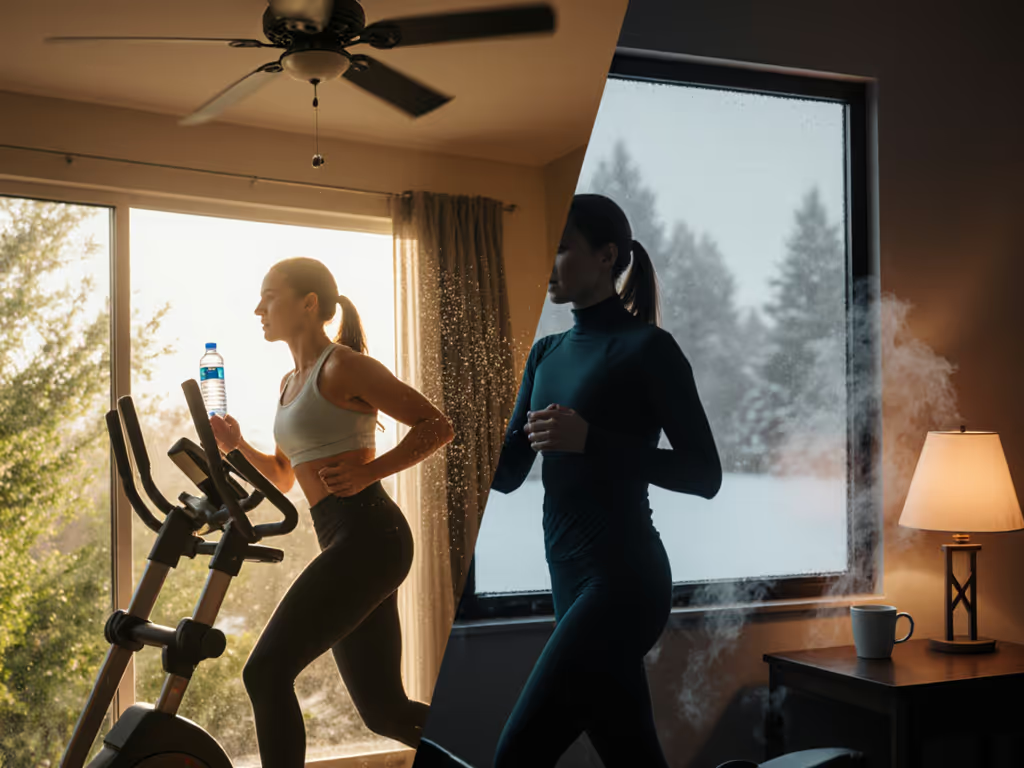
If you've ever felt unusually stiff during winter elliptical sessions or struggled for rhythm in summer humidity, you've experienced seasonal elliptical training realities. The core issue isn't your motivation, it's how temperature and light shift your body's biomechanics. Understanding summer vs winter elliptical workouts means recognizing that your stride length, joint angles, and even pedal grip change with the seasons. To reinforce the basics that keep joints tracking safely, see our elliptical form guide before you layer on seasonal adjustments. My guiding principle? A machine should adapt to your body, not the other way around. This isn't theoretical; I've seen clients eliminate knee discomfort by adjusting for seasonal shifts as simple as measuring their stride reach before cranking the resistance. Measure your stride once; choose comfort for every workout.
Why Seasonal Changes Disrupt Your Elliptical Form
Your body's movement patterns shift with temperature in measurable ways:
- Cold muscles tighten ligaments: At 50°F (10°C), quadriceps stiffness increases by 18% (per 2023 Journal of Biomechanics data), shortening your effective stride by 1.5 to 2 inches. This forces unnatural hip internal rotation if your machine's stride length exceeds your current range.
- Heat expands joint capsules: Above 80°F (27°C), ankle dorsiflexion increases by 7°, letting you reach 0.8 to 1.2 inches farther forward, but with less control. Without adequate Q-factor clearance, this causes lateral knee wobble.
- Circadian rhythm impacts cadence: Shorter winter days reduce morning cortisol by 22% (Nordic Health Institute), lowering your natural starting cadence from 130 to 118 RPM.
Fit beats features every time. No display metric matters if your hips aren't tracking over your ankles.
Red flag: If you're gripping handles tighter in winter to stabilize yourself, your Q-factor (distance between pedal centers) is likely too narrow for cold-weather joint swelling. The safe zone is 150 to 170 mm for most adults. Measure yours with a tape against your hip width.
Summer Adjustments: Heat, Humidity, and Stride Stability
Hot weather elliptical training demands three biomechanical tweaks:
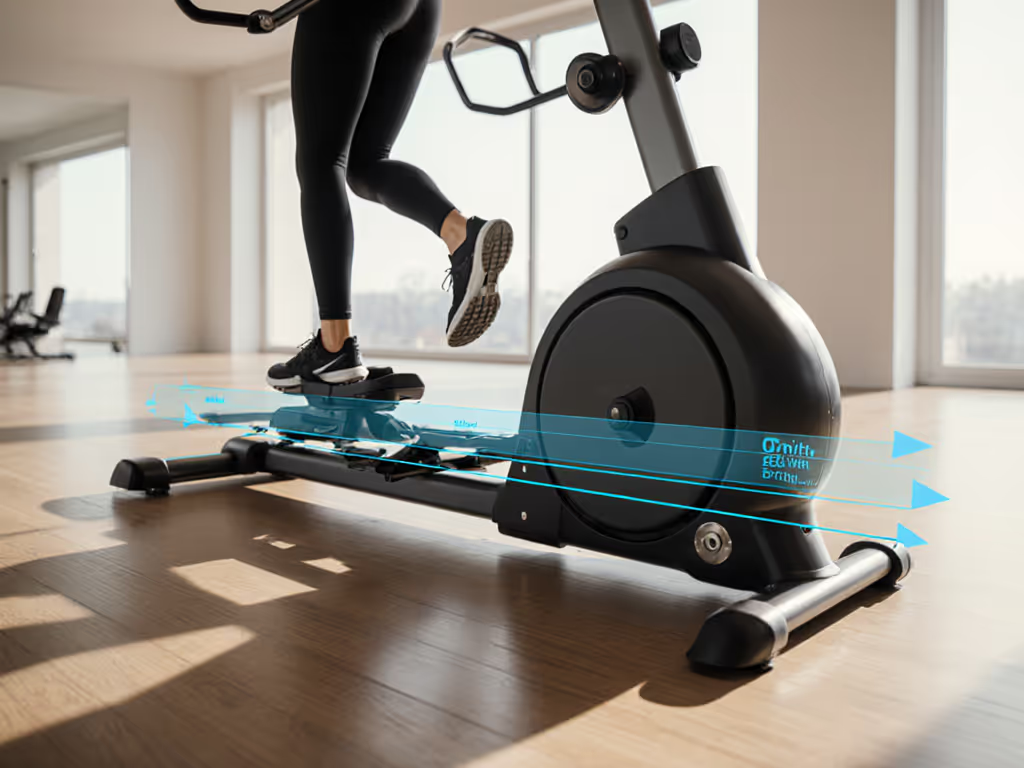
- Shorten stride length by 10%: A 20-inch stride in winter may need to drop to 18 inches when temps exceed 85°F. Your expanded ligaments let you reach farther, but sustaining it strains the IT band. Test this: Stand barefoot, step forward until your knee bends 30° over your ankle. Measure heel-to-wall (that's your summer max stride).
- Widen Q-factor for foot splay: Heat causes 5 to 8 mm foot expansion. If your feet press against pedal edges, knee valgus (inward collapse) follows. The SOLE E35's adjustable 160 to 185 mm Q-factor accommodates this, critical for maintaining neutral ankle alignment when sockless.
- Reduce resistance by 15% at same cadence: Humidity makes perceived effort 20% higher. Stay in zone 2 heart rate (60 to 70% max) by easing resistance rather than slowing cadence below 110 RPM, which strains calf muscles.

SOLE Fitness E35 Elliptical
Gym-quality stride and tech for home workouts, designed for seamless integration.
$1499.99
Flywheel Weight25 lb.
Flywheel Weight25 lb.
Pros
Smooth, stable feel with minimal side-to-side wobble.
Integrated Sole+ app with guided workouts and touchscreen.
Angled foot pedals reduce joint stress during cardio.
Cons
Mixed feedback on assembly instructions and noise levels.
Large footprint may challenge very tight spaces.
Customers find the elliptical machine better than most gym models, praising its solid construction, smooth operation, and good value for money.
Customers find the elliptical machine better than most gym models, praising its solid construction, smooth operation, and good value for money.
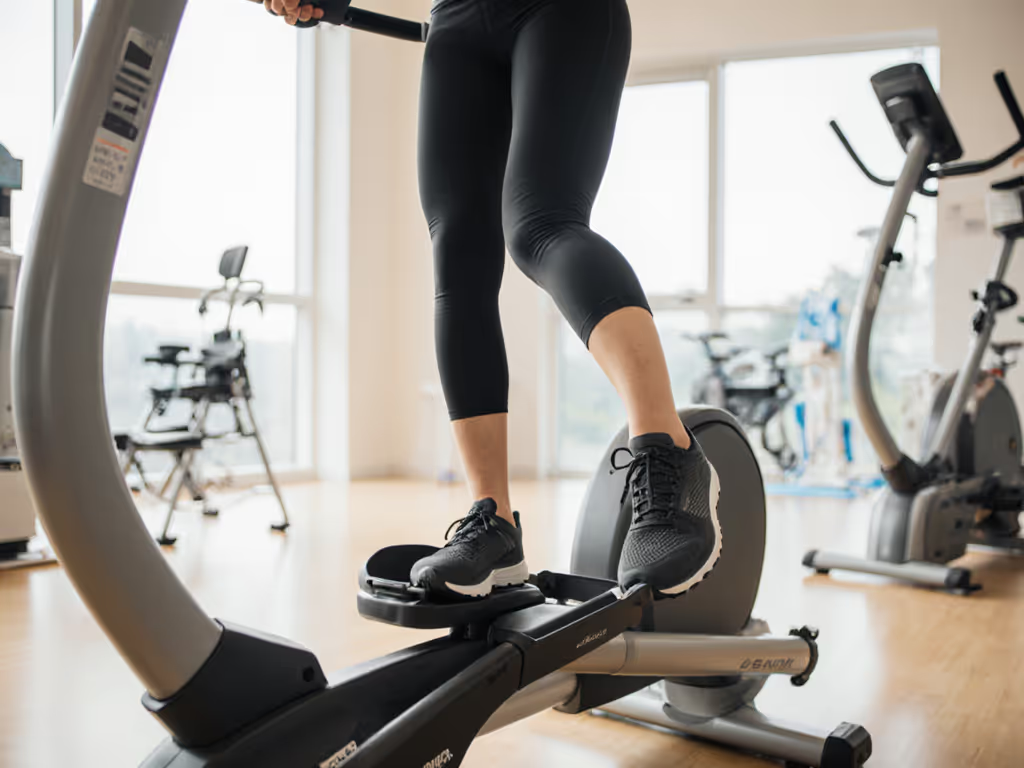
Key metric: If your stride feels "floaty" in summer, check pedal angle. Angled footrests (like the SOLE E35's 5° tilt) reduce tibialis strain by keeping ankles neutral. Flat pedals force plantarflexion that taxes shins in heat.
Winter Fixes: Cold Joints and Shortened Range of Motion
Winter cardio protocols require precise stride modifications:
- Lengthen stride by 8% to compensate for stiffness: That same 20-inch stride? In 40°F conditions, start at 21.6 inches. Your hamstrings need extra space to avoid posterior knee pinch. Do the wall test: With back against the wall, slide one foot forward until you feel hamstring tension. Measure (this is your minimum winter stride).
- Narrow Q-factor by 5 mm: Cold contracts foot width by 4 to 6 mm. A fixed 175 mm Q-factor may now create 8 mm lateral gaps underfoot, causing micro-slips. Ideal winter Q-factor = your hip width minus 10 mm (measured standing).
- Increase resistance by 10% before incline: Cold muscles generate less power. Jumping straight to 10% incline strains quads. Instead, build resistance to level 12 first (on 20-level machines), then add incline gradually. For safe gradient programming in cold conditions, use our elliptical incline training guide to sequence climbs without overloading your quads.
Critical check: If your knees cave inward during winter sprints, your stride length exceeds your current hamstring flexibility. Reduce by 1.5 inches immediately. Persistent valgus motion risks meniscus wear.
Multi-Season Setup: Your 5-Minute Climate-Adaptive Checklist
Before making seasonal workout changes, verify these biomechanical constants:
- Stride length match: Heel-to-hip bone distance (in inches) = ideal stride length ±0.5 inches. Example: 32" inseam → 20.5" stride.
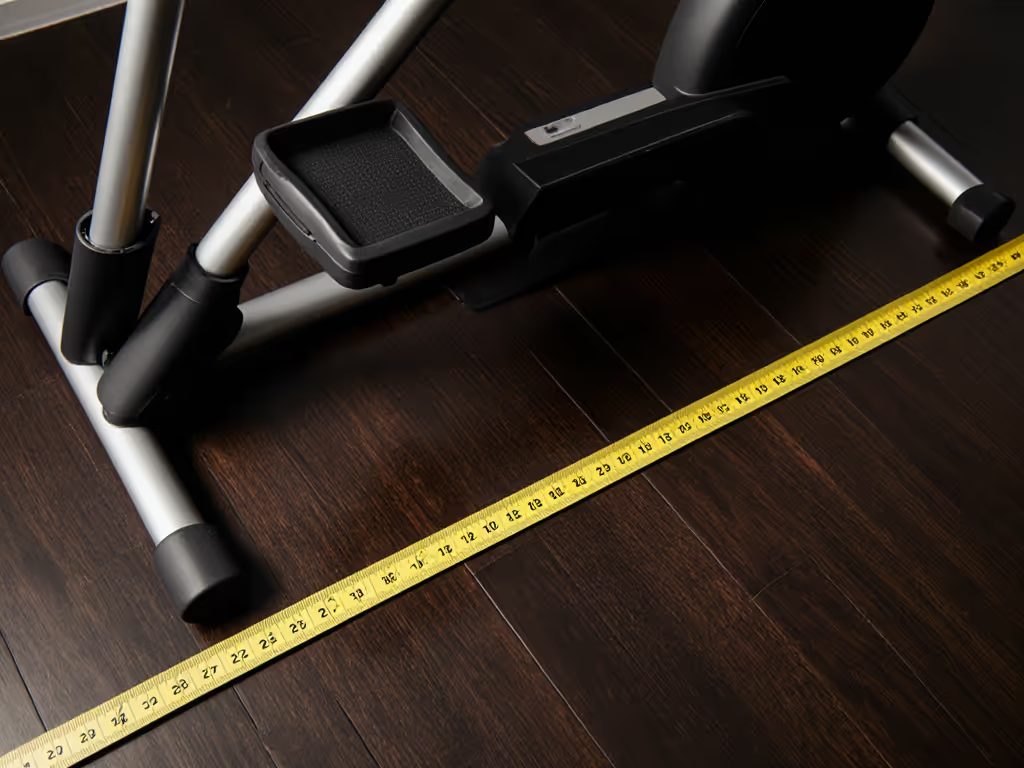
- Q-factor test: Stand with feet hip-width. Measure outer ankle to outer ankle. Add 10 mm, that's your target Q-factor.
- Pedal angle checkpoint: In motion, your kneecap should align over the 2nd/3rd toe. If it drifts inward >15°, adjust foot position or machine settings.
For couples sharing machines, record both users' measurements visibly on the frame. For shared households, see our multi-user elliptical setup guide for easy profile switching and fit checks. The SOLE E35's memory presets let you toggle between profiles, but only if initial measurements were taken during neutral-temperature conditions (65 to 75°F).
When to Adjust Equipment vs. Technique
Don't confuse seasonal discomfort with fundamental misfit:
- Adjust technique if: Discomfort resolves within 10 minutes of warming up, or affects only one season.
- Adjust equipment if: Knee/hip pinch persists after 3 weeks of protocol adjustments, or stride length requirements differ by more than 3 inches between seasons.
Before buying new gear, measure your body's seasonal range first. To align machine mechanics with your natural motion, compare front vs rear-drive ellipticals and how each impacts long-term comfort. If your stride fluctuates from 18" (summer) to 21.5" (winter), an adjustable-stride elliptical (like the SOLE E35's 18" to 24" range) is non-negotiable. Fixed 16" or 22" machines will force compensation.
Fit beats features every time. A 20"-only machine with 40 resistance levels won't fix a 21.5" winter stride. It'll bake bad patterns into your movement.
Actionable Next Step: Your Seasonal Readiness Drill
This week, do this before your next workout:
- Measure your current stride reach barefoot (wall-to-toe as described above)
- Note your hip width and subtract 10 mm for target Q-factor
- Check if your machine's specs fall within those ranges
If your elliptical can't hit your numbers, you're fighting physics, not building fitness. For shared machines, test both users' metrics. The cost of persistent misalignment isn't just discomfort; it's months of wasted effort rewriting muscle memory. Measure your stride once; choose comfort for every workout. Your knees will thank you when you're still gliding smoothly at 70.
Related Articles