Elliptical Training for Dancers: Protect Joints, Preserve Technique
By Amir Qureshi • 9th Jan
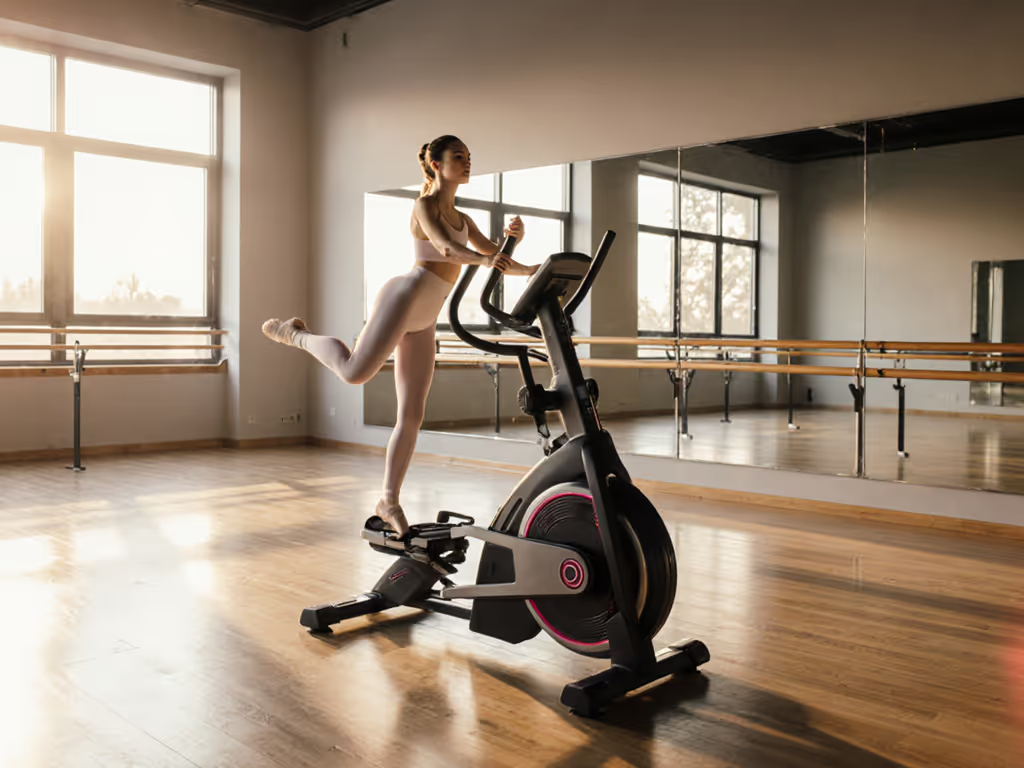
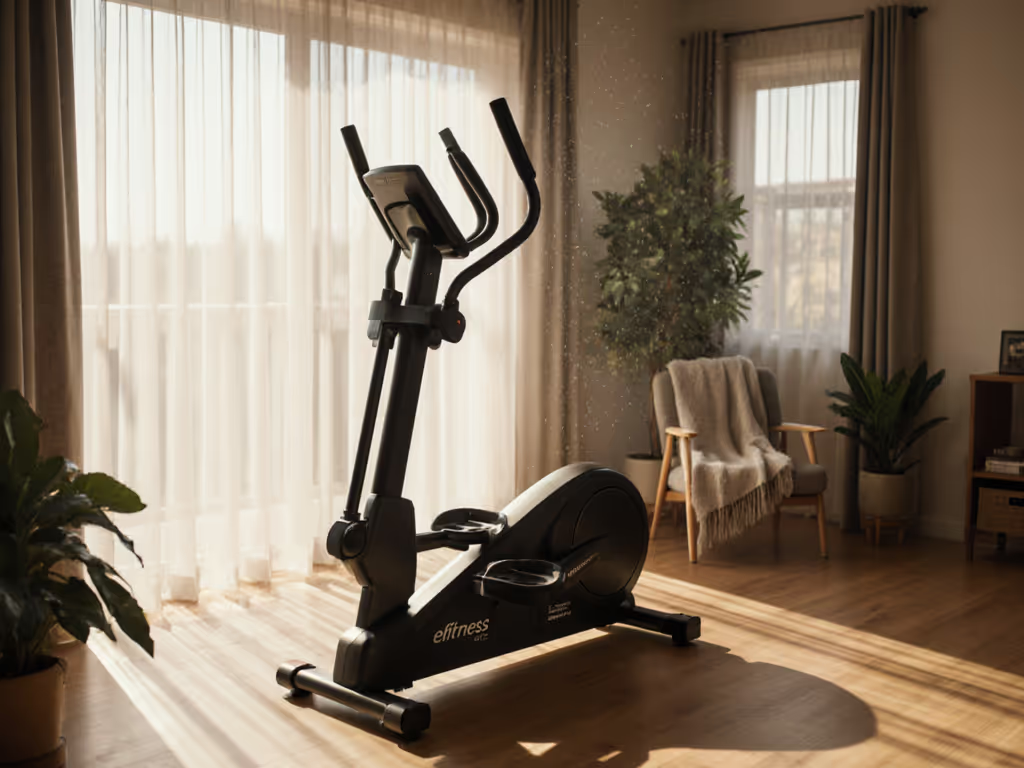
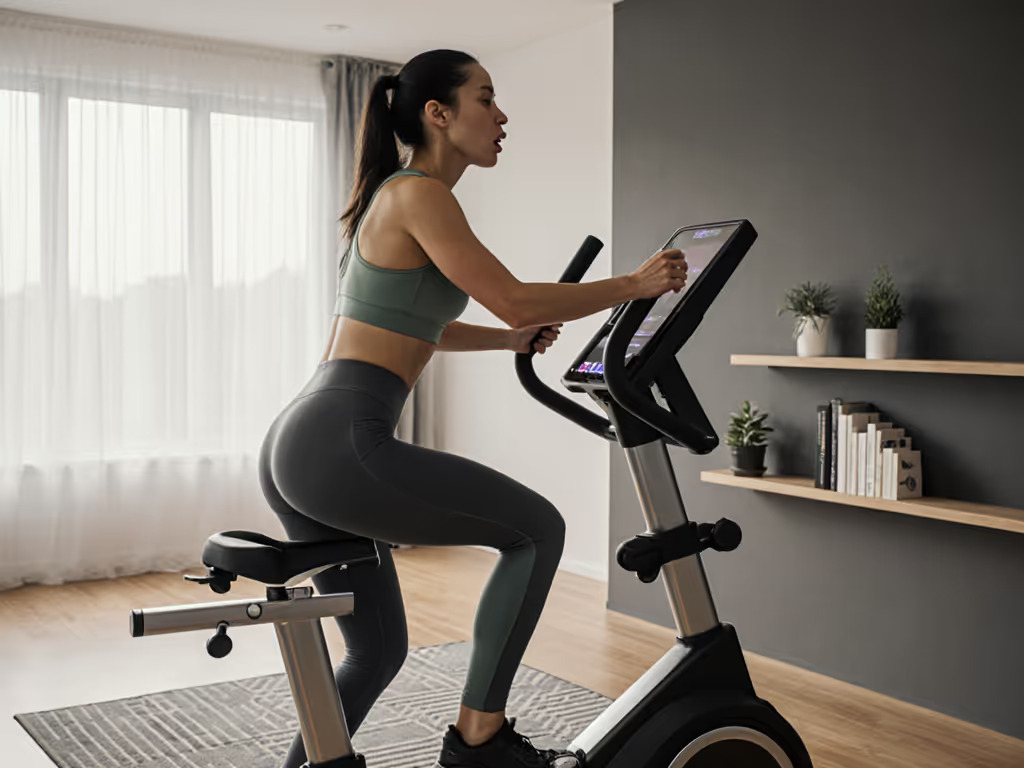
When your pirouettes demand pristine alignment, elliptical training for dancers shouldn't compromise that foundation. Yet too many dancers accept knee pinches or hip shifts because they're told any low-impact cardio works. The truth? Generic machines sabotage what you've spent years building. Dance cardio cross-training must honor your biomechanics first, otherwise you're trading rehearsal stamina for technique erosion. As a former running coach who now specializes in movement mechanics, I've seen dancers waste months on ill-fitting ellipticals while their pliés suffer. Let's fix that with measurement-backed solutions.
Why This Matters More Than You Think
Dance performances are aerobic marathons, not anaerobic sprints like class. Research confirms professional dancers need sustained cardio to prevent performance-day fatigue. But here's the catch: a 2007 Medicine & Science in Sports & Exercise study found ellipticals can exert more force on hip/knee joints than walking because of their fixed foot trajectory. For dancers, whose technique hinges on precise joint alignment, this is critical. Reinforce those alignment fundamentals with our elliptical form guide to keep knees tracking over toes and pelvis neutral. Overuse injuries from mismatched equipment aren't just setbacks, they fracture the muscle memory that makes your artistry possible.
Measure your stride once; choose comfort for every workout.
Q: How do I avoid joint stress without sacrificing cardio gains?
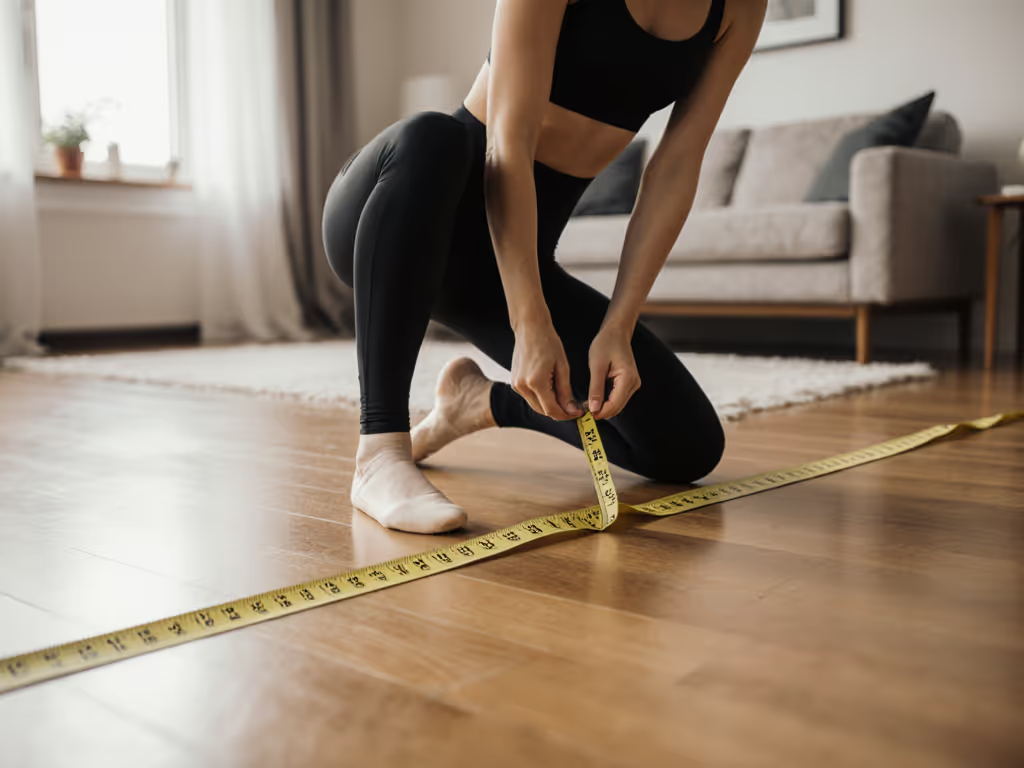
A: Match stride length to your anatomy, not your height. Most dancers blindly select machines based on height charts. Wrong approach. During rehearsal, your stride length is determined by inseam and hip mobility, not overall height. Grab a tape measure:
- Stand with feet hip-width apart
- Measure from floor to hip bone (greater trochanter)
- Multiply by 1.5 (e.g., 32" inseam → 48" stride)
Red flag: Machines under 18" force shortened strides that jam knees. Dancers need at least 20" to mimic natural movement patterns. After winter knee twinges, I taped my floor and discovered my 19" machine required 4" of toe drag, causing the pinch. Switching to 21" with adjustable stride eliminated discomfort in days.
Q: Why do my hips flare outward on the elliptical?
A: Your Q-factor is too wide. Q-factor (stance width between pedal centers) is the silent saboteur of dancer alignment. Most commercial ellipticals default to 210-240 mm, wider than 95% of dancers' natural hip width. This forces you into constant abduction, overloading glutes and shifting pelvis alignment. Over time, this compromises your tendus and développés.
Your threshold: Measure your hip width standing barefoot. If your Q-factor exceeds this by more than 20 mm, you're compensating. Ideal: 180 mm or less for petite frames, 200 mm or less for taller dancers. Watch for: Knees caving inward or outer-hip burning mid-workout, immediate red flags.
Q: Can ellipticals actually help my flexibility?
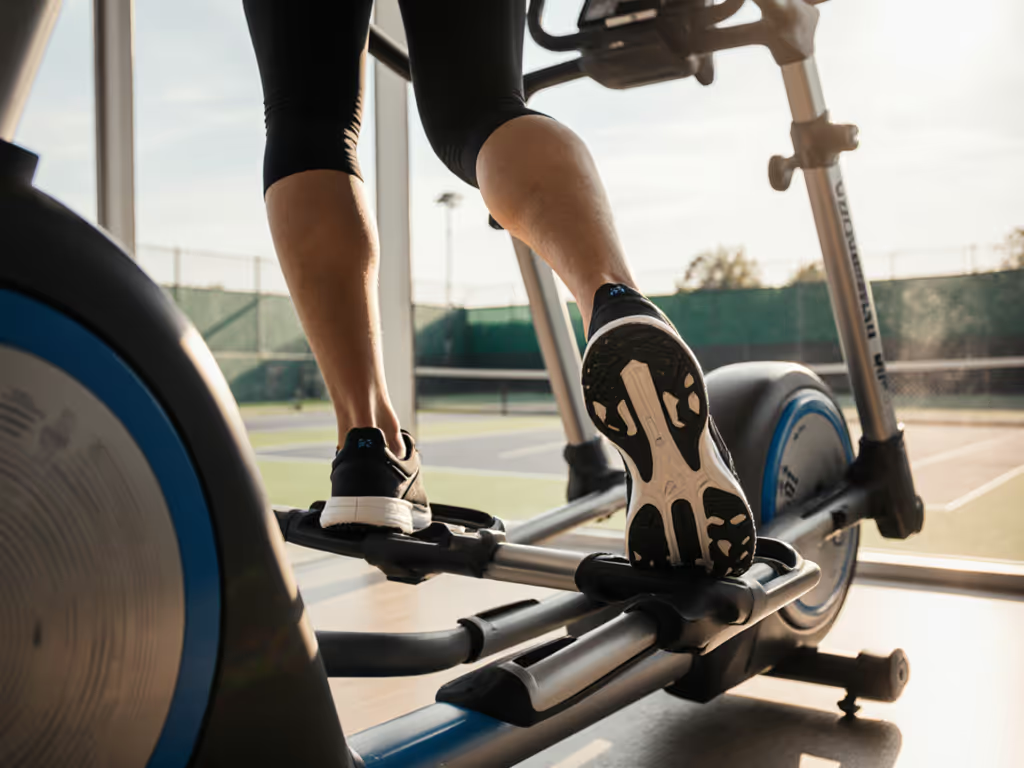
A: Only with neutral foot angles and mindful cadence. Elliptical for flexibility is a myth on machines with fixed footplates tilted inward or outward. This torques ankles and disconnects lower limbs from core control, exactly what ballet technique forbids. Seek ellipticals with:
- Flat, rotating pedals (0 degrees)
- Cadence under 130 RPM (match adagio tempo)
- Forward/reverse motion toggles
Try this: Set resistance low. Focus on keeping shins vertical at 3 o'clock pedal position, just like your relevé alignment. If your heel lifts early, stride length is too short. Dancer injury prevention starts here.
Q: What's the safest routine during heavy rehearsal weeks?
A: Short, technique-focused intervals, not endurance sessions. Forget hour-long steady-state. Dancers need cardio that reinforces, not fights, technique. My protocol for company members: Understand how forward vs backward motion shifts muscle recruitment with our muscle activation guide.
- Warm-up (5 mins): Cadence 90 RPM, zero resistance. Check alignment: knees over toes, pelvis neutral
- Intervals (15 mins):
- 2 mins: Forward motion (resistance 3/10) mimicking grand battements
- 1 min: Reverse motion (resistance 5/10) engaging hamstrings like arabesque
- Cool-down (5 mins): Zero resistance. Focus on deep ankle dorsiflexion
Critical: Stop if turnout creeps in. Your ballet cardio alternatives must prioritize alignment over calorie burn.
The Non-Negotiable Checkpoints
Before mounting any elliptical, execute these tests:
- Wall-to-toe drill: Stand 12" from wall. Slide one foot back into elliptical stance. If toes touch wall, stride is too long. If hip hinges, too short.
- Knee window test: At mid-stride, check space between knees. If gap is more than 2", Q-factor is excessive.
- Footplate scan: Press down mid-arch. If heel or toes lift, pedal angle misaligns your pointe mechanics.
These aren't "nice-to-haves." They're how you avoid trading joint-friendly dance cardio for months of rehab. Remember: A machine should adapt to your body, not the other way around. If your current setup feels off, compare front- vs rear-drive designs to see which mechanism better preserves hip and knee tracking. When I start every consultation with tape measures and cadence checks instead of brand names, dancers return stronger within weeks.
Your Actionable Next Step
This week, measure your inseam and hip width. Compare to your current elliptical's specs (stride length, Q-factor). If mismatches exceed 10%, adjust settings or seek alternatives, before your next rehearsal. Because true dance cardio cross-training never asks you to dim your artistry for the sake of cardio. For immediate relief: Do the wall-to-toe drill tonight. Note where your alignment breaks. That's your blueprint.
Measure, don't guess. Your pliés will thank you.
Related Articles