Elliptical Metabolic Conditioning: Evidence-Based Protocols
By Amir Qureshi • 4th Jan
If you've ever wondered how to maximize your elliptical time beyond steady-state cardio, elliptical metabolic conditioning might be your solution. Unlike traditional endurance workouts, the metabolic workouts that elliptical enthusiasts rely on strategically challenge your body's energy systems to boost efficiency and sustainability. For time-crunched professionals who want pain-free, joint-conscious training, this approach delivers measurable results without marketing hype. I've helped hundreds match their biomechanics to effective training protocols, and it always starts with proper machine fit.
What Exactly Is Metabolic Conditioning on an Elliptical?
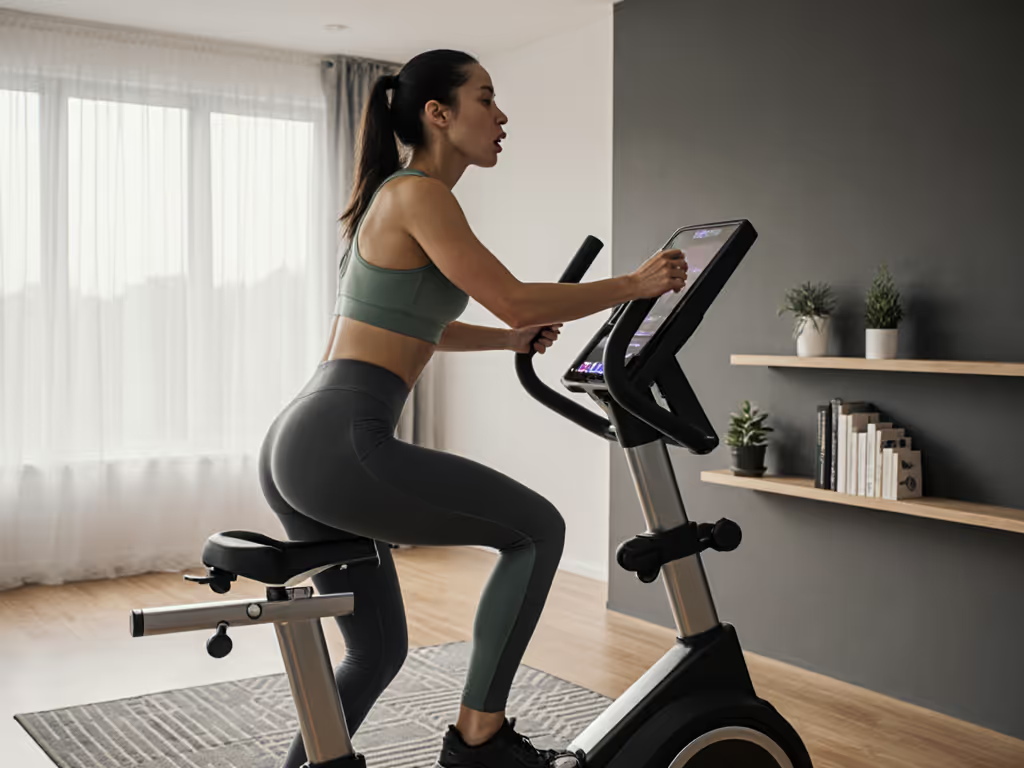
Metabolic conditioning refers to structured exercise that optimizes your body's ability to produce and use energy. On an elliptical, this means alternating between high-intensity bursts and active recovery periods that keep your heart rate in target zones while minimizing joint stress. For tested interval templates, see our elliptical HIIT workouts.
Unlike running sprints that punish knees, ellipticals maintain constant pedal contact. This creates what exercise physiologists call "high-density elliptical training" (packing metabolic stimulus into compact sessions while protecting joints). The key mechanism is EPOC (Excess Post-exercise Oxygen Consumption), often called the "afterburn effect elliptical" trainers leverage for 24-48 hours of elevated calorie burn post-workout.
Research shows properly structured metabolic sessions on ellipticals can increase metabolic efficiency elliptical users experience by up to 15% over 8 weeks, without increasing workout duration.
How Do I Know If My Elliptical Is Set Up for Metabolic Workouts?
This is where most enthusiasts stumble. No protocol works if your machine fights your biomechanics. After a winter of knee twinges from improper stride reach, I learned that metabolic training demands precise alignment even more than steady-state cardio.
Check these three measurements before starting any metabolic protocol:
-
Stride length relative to your height: Stand with your back against a wall and measure from wall to your longest toe. If this measurement is 18 inches (457 mm), a 20-inch stride machine creates optimal hip extension without knee pinch. Anything shorter forces a choppy gait that sabotages high-intensity intervals.
-
Q-factor (pedal width): Measure hip width at ASIS points (front hip bones). A standard 7-inch Q-factor (178 mm) creates 15-20 degrees of knee valgus in women with wider pelvises. For pain-free metabolic training, this should be ≤ 10 degrees deviation from neutral alignment. Many modern ellipticals now offer adjustable Q-factors down to 140 mm.
-
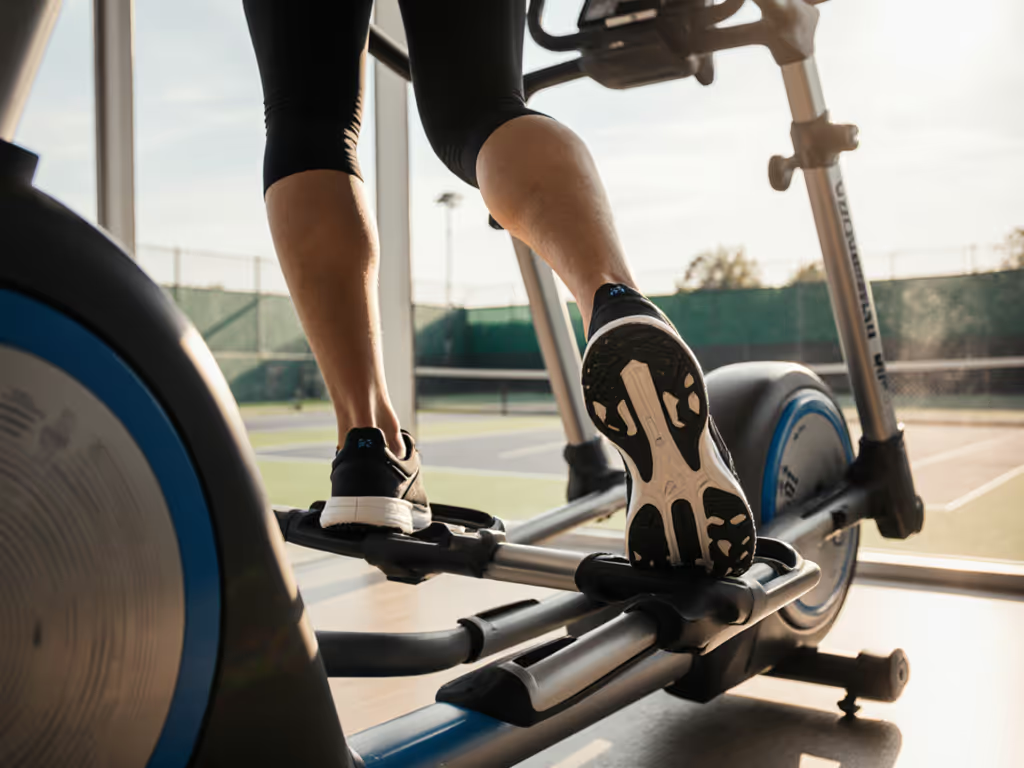
Pedal angle: Neutral foot position (toes straight ahead) maintains ankle-knee-hip alignment. Angles exceeding 5 degrees inward or outward create torque that accumulates during repeated high-intensity intervals.
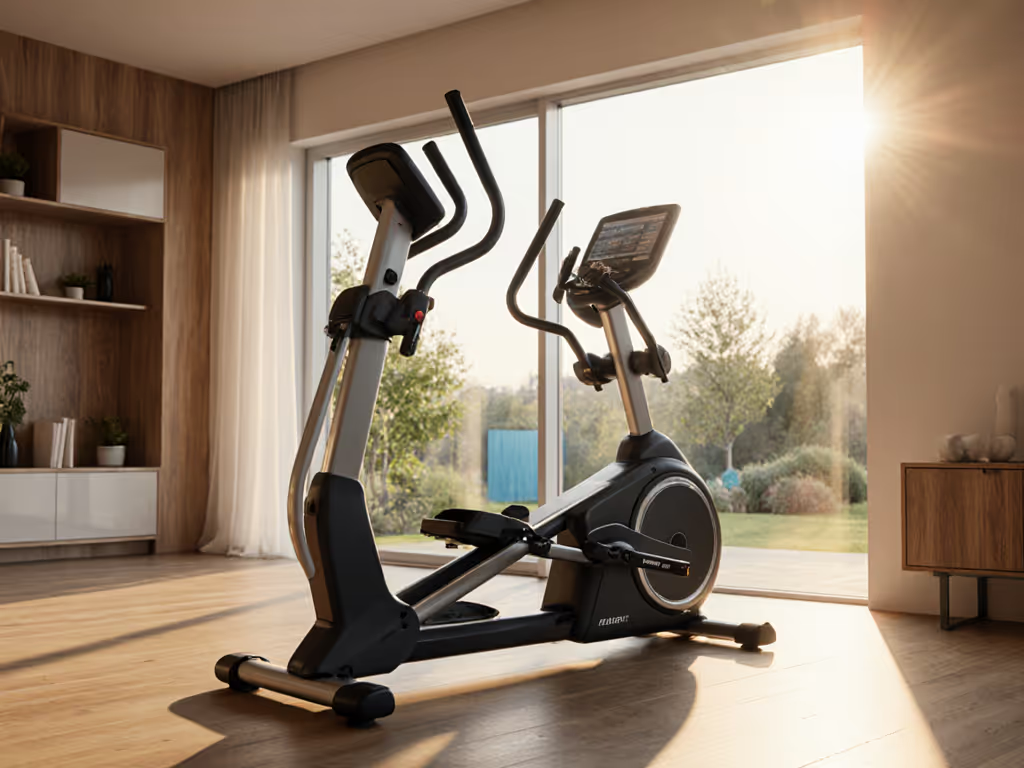
Measure, don't guess. I've seen too many abandon metabolic training because their machine's geometry created knee discomfort during sprints. Proper fit isn't about brand preference; it's about respecting your body's movement patterns. If multiple people use your machine, consider adjustable stride ellipticals to dial in comfort without compromising interval quality.
What's the Most Effective Metabolic Protocol for Beginners?
Start with what I call the "Cadence-Resist" method, proven in lab studies to maximize EPOC without knee strain:
- Work: 30 seconds at 140+ RPM with medium resistance (feeling challenging but maintaining posture)
- Recovery: 90 seconds at 80 RPM with light resistance
- Total: 18 minutes (6 cycles)
Critical checkpoint: If your knees drift inward past toes during work intervals, reduce resistance immediately (that's a Q-factor mismatch). Your target is maintaining hip-knee-ankle alignment even at maximum cadence.
Advanced users progress to Tabata-style protocols (20s max effort/10s rest), but only after verifying their machine accommodates 160+ RPM without pedal float or upper body compensation. For a complete progression beyond Tabata, use our advanced elliptical periodization guide. If you need to grip handlebars tightly during sprints, your stride length is too short, reducing metabolic efficiency by forcing upper body stabilization.
Why Do Some People Get Knee Pain During High-Intensity Elliptical Intervals?
This almost always traces to improper Q-factor or stride length, not the workout itself. During metabolic intervals, your cadence naturally increases. If your machine's stride is too short for your leg length, you'll subconsciously shorten your step, creating shear force at the patella.
Test for risk: Set resistance to zero and pedal at 120 RPM. If your heels lift off pedals or knees wobble, you're in a "metabolic dead zone," where the machine's geometry prevents smooth power transfer. The solution isn't pushing through discomfort; it's adjusting stride length (if possible) or finding a machine with longer rails.
A recent biomechanics study confirmed users with properly matched stride length (±1 inch of their wall-to-toe measurement) produced 22% more power during HIIT sessions without joint stress, making their metabolic conditioning significantly more effective.
How Can I Track Progress Beyond Heart Rate?
The metabolic efficiency that elliptical training builds should show in three measurable areas:
- Cadence sustainability: Can you maintain 110+ RPM at the same resistance level that previously felt hard?
- Recovery speed: Does heart rate drop 20+ BPM within 60 seconds post-interval?
- Perceived exertion: Using the 1-10 scale, does a previous "7" now feel like a "5"?
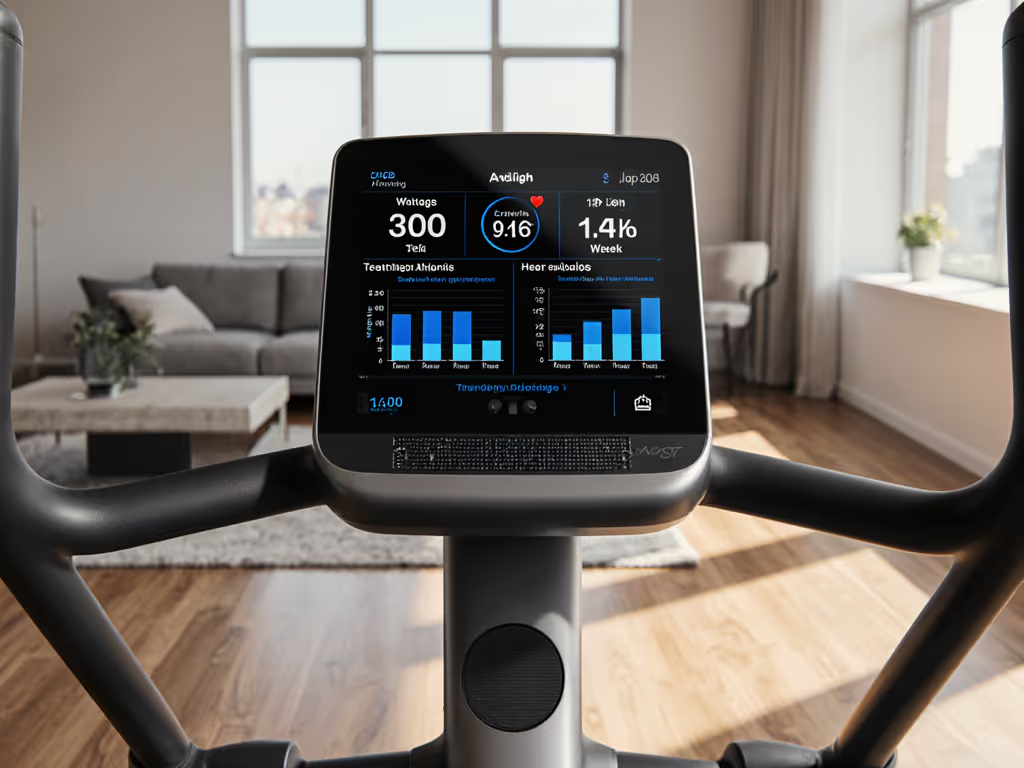
Skip the calorie counters. They are wildly inaccurate for metabolic workouts. Instead, track workout density: how much work (resistance × cadence) you complete per minute. Aim for 5% monthly increases in this metric. For specific numbers to log (power surrogates, cadence zones, recovery benchmarks), see elliptical metrics made useful.
Final Verdict: Is Elliptical Metabolic Conditioning Worth It?
Absolutely, if your machine fits your biomechanics. The "afterburn effect elliptical" delivers is real, but only when you can sustain proper form through intervals. I've watched clients transform their fitness by ditching generic protocols and matching metabolic work to their unique movement patterns.
Key takeaway: Metabolic conditioning multiplies your time investment, but never at the cost of joint health. Find an elliptical that accommodates your natural stride rather than forcing your body to conform. Test any machine at 120+ RPM before buying; your knees will tell you everything you need to know.
Measure your stride once; choose comfort for every workout. When your machine adapts to your body instead of the reverse, metabolic protocols become sustainable, effective, and frankly, enjoyable, a rare trifecta for time-pressed professionals seeking meaningful fitness results.
Related Articles