Elliptical for Fibromyalgia: Comfort-First Workouts
By Priya Natarajan • 17th Dec
When chronic widespread pain makes every movement feel like walking through wet cement, finding the right exercise can feel impossible. But research consistently shows that elliptical for fibromyalgia offers a uniquely gentle path forward, when approached with smart fibromyalgia exercise protocols. Forget punishing intervals or marathon sessions. The real magic happens when you prioritize sustainable comfort over intensity. After all, consistency isn't built on willpower alone. It's built on frictionless routines that respect your body's limits today while nurturing your resilience for tomorrow.
Why the Elliptical Fits Like a Missing Puzzle Piece
Unlike treadmills that jar joints or bikes that compress sensitive hips, a well-matched elliptical provides smooth, rhythmic motion that minimizes impact while still engaging your entire body. This matters profoundly for fibromyalgia pain management exercise. Studies confirm that low-impact cardio like this reduces inflammation markers and stimulates natural pain-relieving endorphins, without triggering the flare-ups that often accompany higher-impact activities. The key? Emphasizing feel over metrics. When your machine glides quietly beneath you, with a step-up height low enough to avoid awkward reaching, every stride becomes a tiny act of trust in your body's capacity to heal. If noise and resistance feel matter for your comfort, compare magnetic vs air resistance systems to pick the smoothest, quietest fit.
Designing Your Comfort-First Protocol (No Guilt Allowed)
Most people abandon exercise routines because they mistake sustainability for sacrifice. With fibromyalgia, the stakes are even higher. Here's how to build gentle elliptical workouts that actually fit your reality:
Your Non-Negotiable Setup Checklist
Before you even step on the machine, eliminate hidden friction points. These take 2 minutes but prevent months of frustration:
-
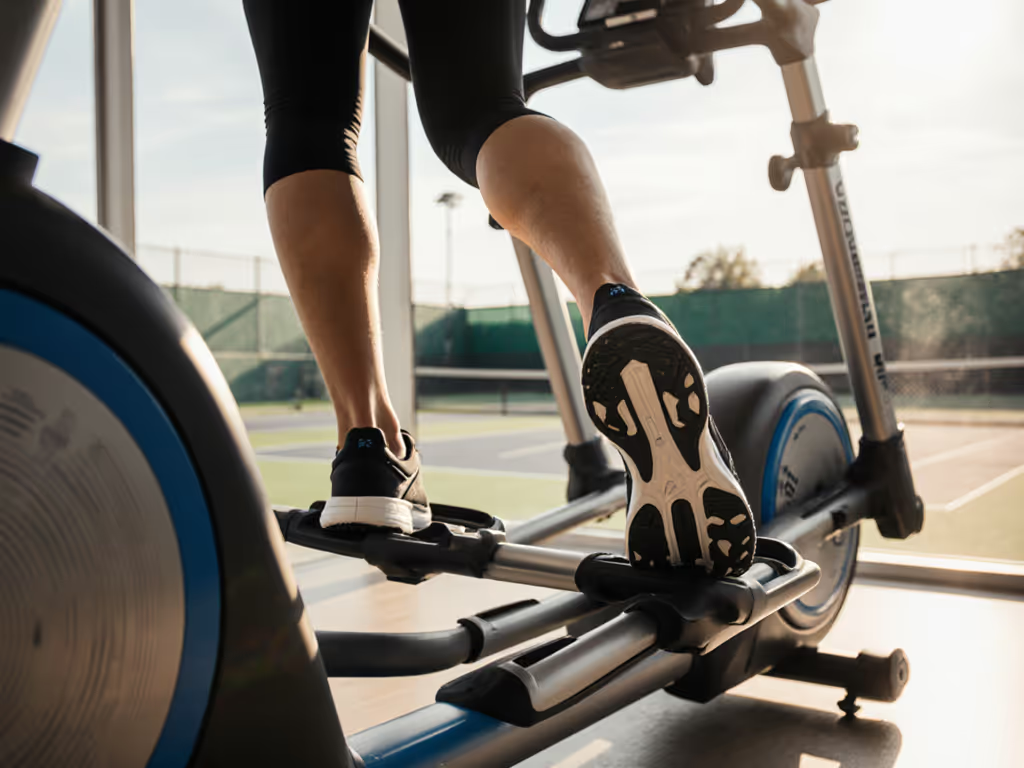
Step-up height check: Stand beside the machine. Can you place your foot on the pedal without hiking your hip? Anything over 10 inches often strains tender knees or hips. Prioritize models under 9 inches for pain-free mounting.
-
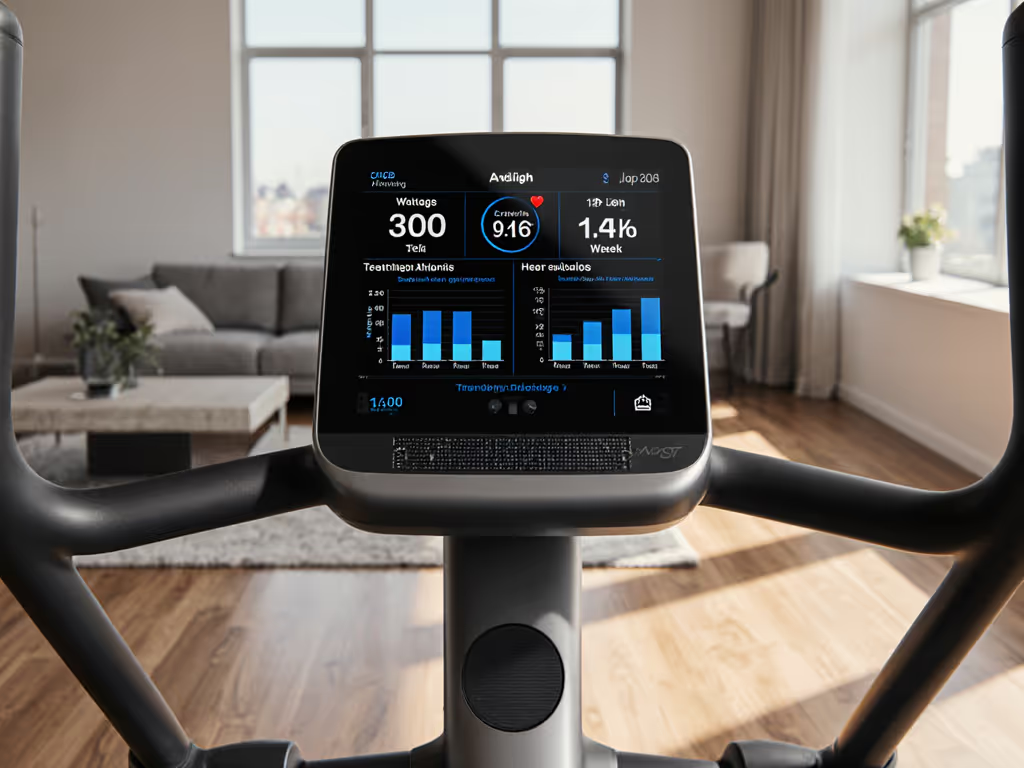
Console clarity test: Scan the display. If you need to squint or decipher icons, skip it. Look for large, high-contrast numbers and one-touch preset buttons ("Beginner 1" is ideal).
-
Handle comfort scan: Grip the moving handles. Do they feel padded? Are they positioned so your elbows stay softly bent? Pressure points here can radiate pain into sensitive shoulders.
-
Start-up smoothness trial: If testing in-store, turn resistance to minimum and push gently with one foot. Does it move silently without that jerky "catch" feeling? Smooth-start resistance is non-negotiable.
The 3-Step Pain-Sensitive Routine That Works
This protocol emerged from working with hundreds of time-crunched adults who thought exercise was off-limits. The focus? Making starting easier than not starting. Remember: small, repeatable wins turn cardio into a lifelong habit.
Step 1: The Micro-Session (Days 1-3)
- Duration: 4 minutes total (yes, really)
- Resistance: Lowest setting
- Motion: Stand tall, hold static handles, let feet glide. No arm pumping.
- Why it works: Eliminates the "all or nothing" trap. Your only job is to show up. End before fatigue sets in (ideally while pouring coffee). Research shows even these micro-doses improve circulation and reduce inflammation over time. To keep movements pain-free, review our elliptical form guide for joint-friendly posture cues.
Step 2: The Confidence Builder (Days 4-10)
- Duration: 7 minutes (but break into 2+2+3 minutes if needed)
- Resistance: Still lowest setting
- Motion: Add gentle arm movement only when comfortable
- Pro tip: Program a "Fibro Start" preset. One button press removes decision fatigue. Notice how your feet feel on the pedals, not calorie counts.
Step 3: The Sustainable Flow (Ongoing)
- Duration: 10-12 minutes, max 3x/week
- Resistance: 1-2 notches up only if pain-free
- Motion: Full stride, but keep perceived effort at "conversational" level
- Critical mindset: Stop before discomfort. Your goal isn't exhaustion, it's proving to yourself that movement can feel safe. Track "days completed," not distance.
"Your future self will thank you" for honoring these boundaries. Pushing through pain sabotages the very consistency you're building.
Why "Just Do It" Advice Backfires (And What Works Instead)
Traditional fitness culture often frames exercise as conquest. For fibromyalgia, this is catastrophic. That voice saying "Push harder!" ignores the neurological hypersensitivity driving your pain. Instead:
-
Trade intensity for rhythm: A consistent 8-minute session done 4x/week beats one ambitious 20-minute struggle that triggers a 3-day flare-up.
-
Celebrate invisible wins: Notice better sleep before reduced pain scores. Acknowledge choosing the machine before pressing start. These are neurological victories. For mood and stress regulation benefits that support consistency, see our elliptical mental health guide.
-
Forget "recovery" language: You're not "bouncing back" from illness. You're building capacity within your current reality. A low-impact elliptical for fibromyalgia supports this by design, when you respect its purpose as a habilitation tool, not a punishment device.
Your Long-Term Playbook
The most sustainable routines feel so effortless they become invisible. Like my own wrist-healing journey in a cramped apartment, success came from two rules: zero setup friction and sessions short enough to finish before coffee. Years later, I still:
- Use the same "Beginner 1" preset daily
- Keep shoes and water bottle on the machine
- Track streaks with a wall calendar, not an app
This isn't laziness, it's behavioral engineering. To keep your machine smooth and quiet, follow our elliptical maintenance guide so friction never becomes a barrier. When your elliptical for chronic widespread pain requires zero decisions, your body learns to crave that gentle rhythm. Pain management becomes less about fighting symptoms and more about nurturing the quiet confidence that comes from showing up for yourself, gently, day after day.
Final Verdict: Comfort Isn't Optional, It's the Foundation
An elliptical won't cure fibromyalgia. But approached as a comfort-first habit tool (prioritizing low step-up heights, intuitive consoles, and micro-sessions), it becomes one of the most reliable allies for sustainable movement. Forget chasing metrics. Focus instead on building the ritual: the sound of smooth pedals, the feel of supported handles, the quiet pride of honoring your limits. That's how small, pain-free moments become the consistency your body (and your nervous system) truly needs. Start absurdly small. Celebrate showing up. Your future self will thank you.
Related Articles