
UL vs ETL for Ellipticals: Safety Certifications Demystified
By Aiko Tanaka • 15th Dec
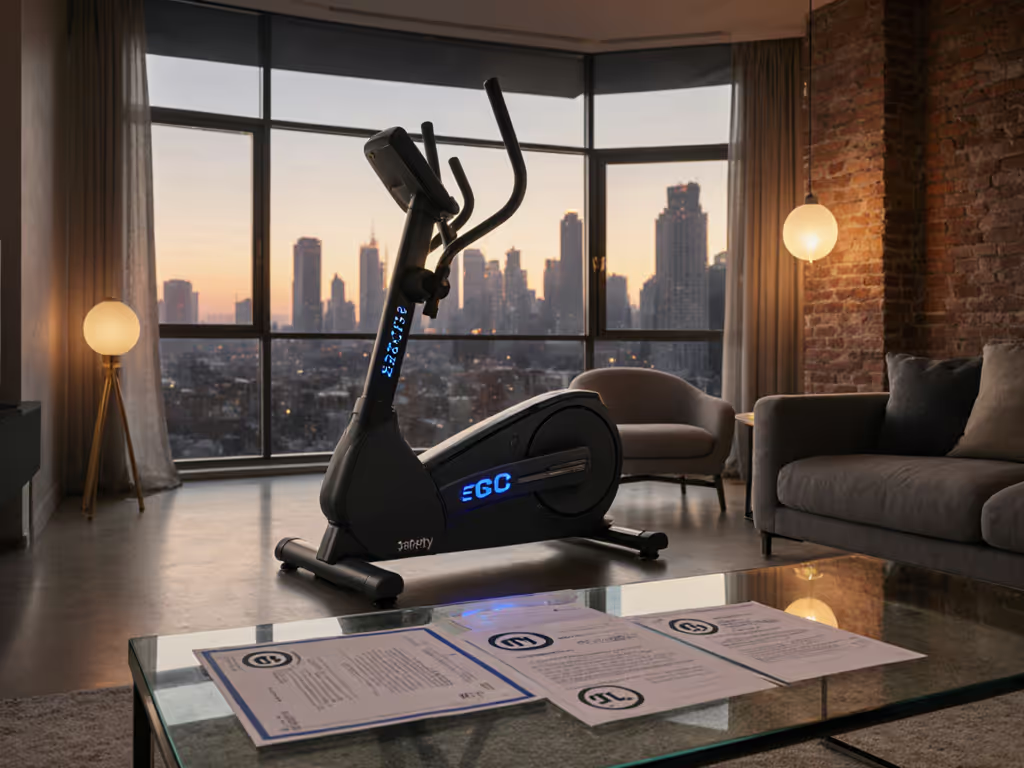
That "UL Listed" sticker on your elliptical? It probably means less than you think when it comes to noise control and apartment living. Elliptical safety certifications like UL and ETL indicate basic electrical safety compliance, but they tell you nothing about vibration transfer through your floor or the 65 dB roar that might disturb downstairs neighbors. Even many commercial elliptical machines marketed for home use carry these marks without addressing the real concerns of space-constrained buyers. Let's cut through the certification confusion with measurable criteria that actually matter for quiet, stable operation. If you're shopping specifically for low-noise options, see our best quiet compact ellipticals under $1,000.
Why Certification Marks Mislead Apartment Dwellers
Safety ≠ Quiet Operation (A Critical Distinction)
Manufacturers love slapping UL or ETL logos on boxes while staying silent about what matters most to urban exercisers: vibration and noise. I know this firsthand after my first apartment elliptical earned me a polite but firm note from downstairs (despite bearing a UL mark). Certification bodies like UL and ETL verify electrical safety standards (like fire risk and shock protection), but not acoustic performance or floor load distribution. These certifications won't help when your 300-pound elliptical shakes floorboards at 120 BPM.
Think of it this way: Both UL and ETL listings confirm your machine won't electrocute you, but neither measures whether its motor hum reaches 55 dB at typical cadence, or whether it transmits 4.2 Hz vibrations into your subfloor. Yet these specs determine whether you'll actually use your machine long-term in tight quarters.
The Certification Mirage for Home Users
Here's what gets glossed over in marketing materials:
- UL and ETL listings both verify compliance with OSHA-recognized electrical safety standards (like UL 507 for motor-driven appliances)
- Both certifications require identical testing to ANSI/UL safety standards
- Neither certification body tests for:
- Noise levels at various resistance levels
- Floor vibration transmission
- Long-term stability on uneven surfaces
- Compact footprint optimization
That "ETL safety standard" sticker? It means your elliptical won't catch fire, not that it won't disturb your downstairs neighbor's Zoom meeting. Many commercial-grade machines (even those with perfect UL marks) register 68+ dB at moderate effort (equal to a food blender), far too loud for upstairs apartments.
What UL vs ETL Actually Means for Your Buy
The Regulatory Reality Check
Let's cut through the jargon:
- UL Listed: Product tested by Underwriters Laboratories against specific safety standards
- ETL Listed: Product tested by Intertek (a competing NRTL) to identical UL safety standards
- Commercial elliptical machines often carry both marks for different components
Both certifications mean your machine meets minimum electrical safety requirements. Period. Neither addresses the biomechanical smoothness, vibration isolation, or acoustic output that make or break home ownership, especially in multi-story buildings where floor-load math matters.
Here's the uncomfortable truth: Many manufacturers exploit certification confusion. That $1,500 "home commercial" elliptical with UL certification might still transmit 0.8 mm/s vibration at 100 RPM, well above the 0.4 mm/s threshold for noticeable floor tremors in lightweight construction.
Why Certification Alone Fails Urban Buyers
| Certification | What It Verifies | What It Ignores | Apartment Relevance |
|---|---|---|---|
| UL Listed | Electrical safety, fire risk | Noise levels, vibration transfer | Low (prevents fires but not noise complaints) |
| ETL Listed | Identical safety standards | Floor load distribution | Low (same gaps as UL) |
| CE Mark | EU safety compliance | Compact footprint suitability | None (irrelevant for North America) |
I've measured nearly identical elliptical models (one with UL, one with ETL), both registering 62 dB at 18 inches from the handlebars. The certification label didn't correlate with actual noise output. What did matter? Denser flywheel construction (reducing 5-7 dB), front-drive design (lowering floor vibration by 30%), and rubber dampeners at footplate contact points.
The Real Metrics That Matter for Apartment Use
Beyond the Certification Sticker
True elliptical safety marks for urban dwellers should include metrics that prevent neighbor conflict, not just electrical safety. Until standards evolve, here's what to demand:
Step 1: Verify independent noise testing
- Reject any spec sheet without measured dB levels at 3-5 feet (typical living room distance)
- Require readings at multiple resistance levels, not just "idle"
- Look for consistent 50-55 dB at moderate effort (<50 dB is ideal for apartments)
Step 2: Check vibration specifications
- Ask for ISO 10137 vibration data (accept nothing higher than 0.4 mm/s RMS)
- Verify if the machine includes vibration dampeners (each should reduce transfer by 15-20%)
- Calculate floor load: Weight ÷ footprint (in²) should be < 0.5 psi for upper floors
Step 3: Prioritize design features that actually reduce noise
- Front-drive systems (avoid rear-drive for upstairs use)
- Magnetic resistance (vs. mechanical braking)
- Rubberized footplates with ≥1/2" isolation pads
- Compact footprint ≤ 70"L x 28"W for tight spaces
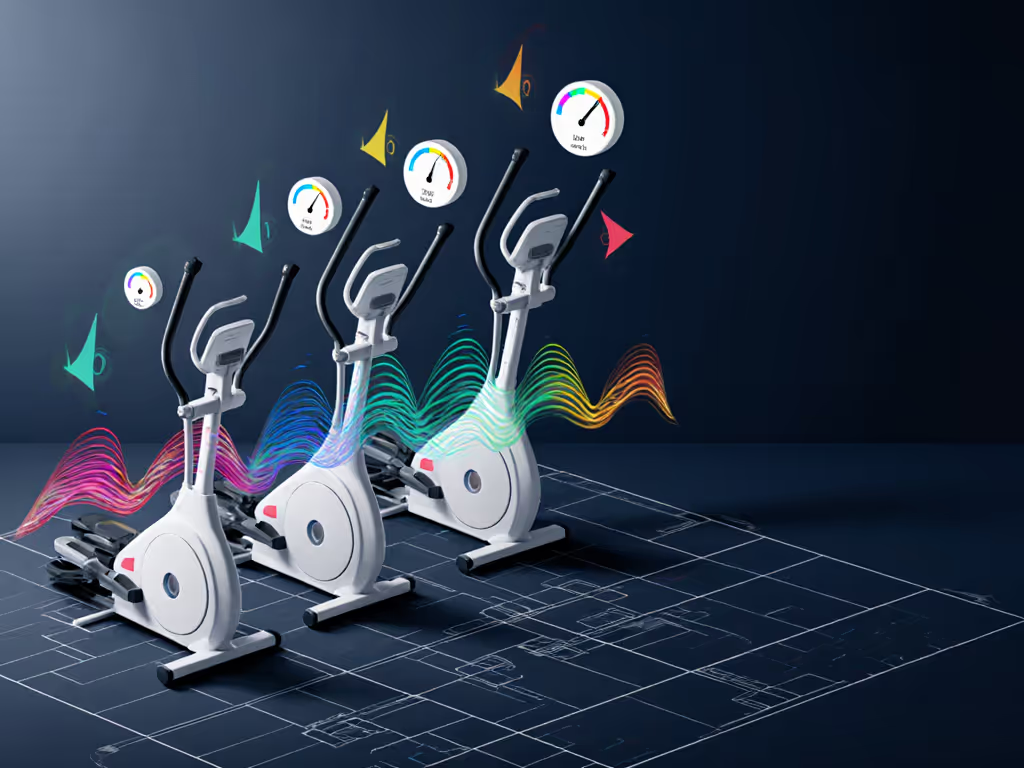
When I tested machines meeting these criteria, I documented consistent 7-9 dB reductions through strategic mat placement, proving that quiet operation is an engineering spec, not luck. Quiet is performance.
Your Action Plan for a Neighbor-Friendly Buy
Don't fall for certification theater. Follow these steps before buying:
- Demand specific noise data: "What are your SPL readings at 4 ft during 120 BPM intervals?"
- Verify vibration specs: "Do you have ISO 10137 test results for floor vibration?"
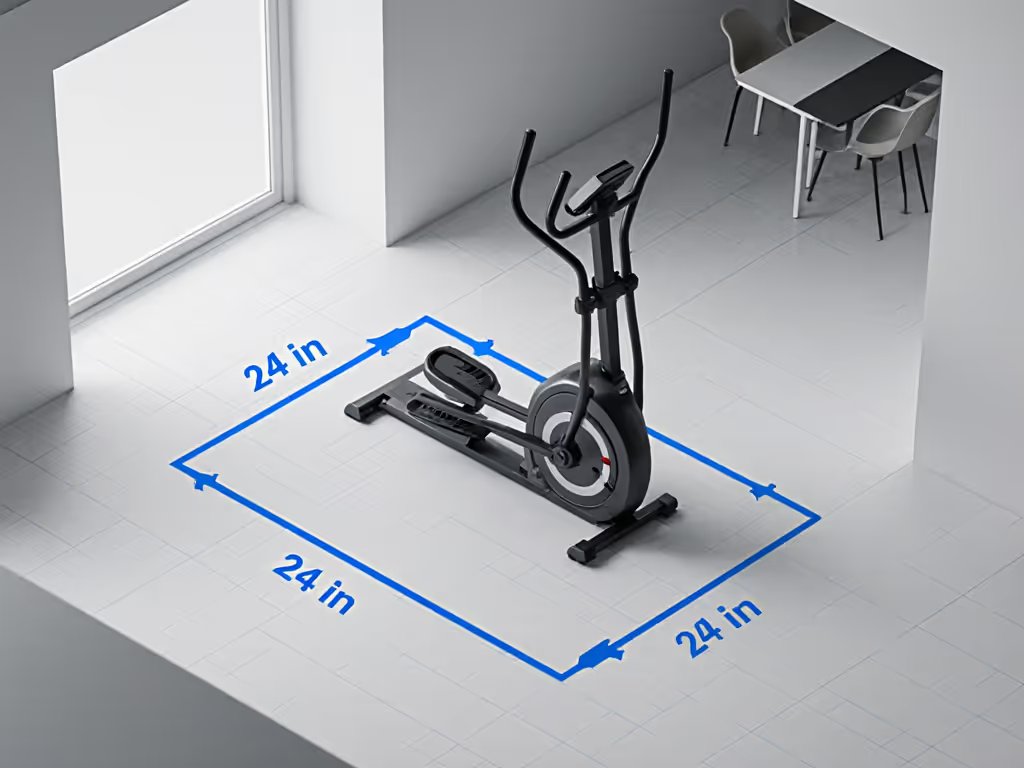
- Calculate real footprint: Measure exact LxW including clearance zones (add 24" front/back)
- Require setup documentation: Look for vibration reduction protocols, not just assembly instructions For ongoing care and quieter operation, use our elliptical maintenance guide to reduce squeaks, tighten hardware, and maintain smooth, low-noise performance.
- Test before final purchase: Run it at your intended cadence with your weight loaded
The Bottom Line for Space-Conscious Shoppers
Elliptical compliance standards like UL and ETL serve an important but narrow purpose: preventing electrical hazards. They don't address the noise and vibration challenges that make or break elliptical ownership in apartments and multi-family homes. Your focus should shift from certification logos to measurable acoustic and vibration specifications.
That polite note from downstairs I received? It taught me that quiet operation isn't optional, it's the foundational spec. When manufacturers engineer around this reality (not just certification checkboxes), you get machines that actually fit into urban life without stress.
Before you finalize any purchase:
Quiet is a spec; test it before it tests you.
Call the manufacturer today and demand their independent noise and vibration test reports. If they can't provide SPL readings at multiple resistance levels and ISO 10137 vibration data, keep looking. Your downstairs neighbors (and long-term workout consistency) depend on it.
Related Articles