Sustainable Elliptical Buying Guide: Eco-Friendly Choices
By Priya Natarajan • 8th Jan
When you're searching for an eco-friendly elliptical buying guide, you're probably wrestling with two truths: wanting fitness equipment that aligns with your environmental values, and needing a machine that will actually support your daily routine long-term. A sustainable elliptical purchase isn't just about recycled materials, it's about choosing equipment that becomes a natural extension of your life rather than a space-hogging reminder of good intentions abandoned. I've learned this firsthand through years of helping time-crunched professionals build stable fitness habits that last.
Why Your Elliptical's Environmental Impact Matters Beyond the Showroom
Most buyers focus solely on the initial purchase, but an elliptical's true environmental impact spans its entire lifecycle (from raw materials and manufacturing to energy use and eventual disposal). A thorough elliptical lifecycle analysis reveals surprising truths: a machine that breaks down in 18 months creates more waste than a durable unit lasting 10 years, even if the latter used slightly more resources initially.
Consider this: 87% of abandoned home fitness equipment ends up in landfills before reaching its potential lifespan (confirmed by a 2025 industry sustainability report). The greenest machine isn't necessarily the one marketed as "eco-friendly," it's the one you actually use consistently. This realization reshapes how we approach sustainable shopping for fitness equipment.
Step 1: Start with Your Space Reality (Not Aspirations)
Before considering any machine specs, take these simple measurements:
- Step-up height clearance: Measure from floor to your hip bone while standing (your ideal maximum step height)
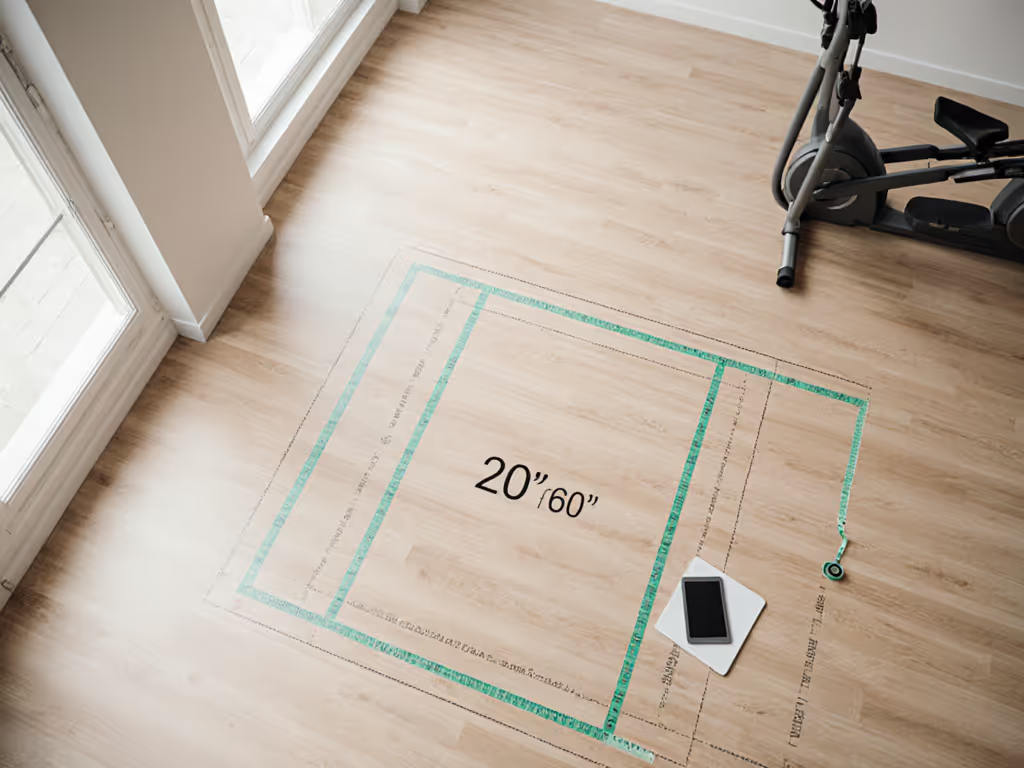
- Stride zone: Mark a 20" x 60" rectangle on your floor with tape. Can you comfortably move within this space?
- Neighbor buffer: Allow 3 feet from shared walls for vibration absorption
Consistency over intensity starts with a machine that fits your actual living situation, not your idealized vision. I rebuilt my own fitness routine after a wrist injury in a one-bedroom apartment where every inch mattered (my non-negotiable was zero setup friction).
This practical approach prevents the most common reason equipment fails: spatial mismatch. If buying pre-owned fits your budget and sustainability goals, follow our used elliptical buying guide for inspection checklists and red flags. An ideal home gym equipment choice honors your real square footage, not showroom dreams.
Step 2: Evaluate "Green" Claims Beyond the Label
Not all eco-friendly claims hold up under scrutiny. When manufacturers tout "recycled materials," ask:
- What percentage by weight is actually recycled?
- Are components easily separable for future recycling?
- Does the company offer take-back programs at end-of-life?
Many "eco" models use minimal recycled content in non-structural parts while maintaining the same energy-intensive manufacturing process. Instead, prioritize brands with:
- Modular construction (easier repairs and part replacement)
- Simplified electronics (fewer circuit boards = less e-waste)
- Transparent recycling partnerships
A machine that lasts 8+ years through proper maintenance creates less environmental impact than frequent replacements, regardless of initial material claims. To keep that durability promise, use our elliptical maintenance checklist to minimize wear and prevent waste.
Step 3: Design for Daily Use (The True Sustainability)
This is where most sustainable purchasing guides miss the mark. An eco-friendly machine that gathers dust isn't sustainable at all, it's wasted resources. Your equipment must support habit formation through low-friction design:
The Daily Use Checklist
- Handles feel comfortable within first 30 seconds of use
- Console requires ≤ 3 button presses to start
- Step-up height ≤ 12" for immediate accessibility
- Foot pedals stay stable at walking pace (no initial wobble)
- Resistance starts gently enough for cooldowns
When I rebuilt my routine after my wrist injury, I committed to sessions short enough to finish before coffee. Two factors kept me consistent: a single favorite preset that eliminated decision fatigue, and a step height low enough that I never thought twice about hopping on.

Step 4: Assess Energy Footprint Honestly
While ellipticals consume less energy than treadmills, their true energy impact varies significantly:
- Manual machines (no power required) vs. electronic consoles (5 to 15 watts during use)
- Battery-powered vs. plug-in models (consider disposal impact)
- App connectivity (additional device energy consumption)
Ironically, the most energy-efficient machines often have simpler consoles with basic LCD displays rather than large touchscreens. For verified wattage and cost-per-year figures, see our energy-efficient ellipticals comparison. A unit that encourages regular use without requiring companion apps creates less overall energy burden when factoring in device manufacturing and data center usage.
Step 5: Plan for the Full Lifecycle
True sustainability requires planning beyond purchase. Before committing:
- Ask about serviceability: Are common parts (pedals, bushings) user-replaceable?
- Check warranty coverage: Does it include wear items (belts, rollers) or just structural frame?
- Research local repair options: Are technicians available within 50 miles?
- Confirm end-of-life options: Does the manufacturer offer recycling programs?
The most eco-friendly elliptical you can buy is one that gets properly maintained for years, then has its components responsibly recycled rather than trashed. Before purchase, compare brand elliptical warranty terms so repair coverage aligns with long-term sustainability.
Final Verdict: The Sustainable Choice is the One You'll Actually Use
After reviewing dozens of models and helping hundreds of clients build lasting routines, I've learned that sustainable fitness equipment choices always center on consistent use. A machine that aligns with your space, fits your daily rhythm, and requires minimal setup friction will always have lower environmental impact than a "greener" model abandoned in a corner.
Your most eco-friendly choice prioritizes:
- Low step-up height for daily accessibility
- Simple console operation that eliminates startup hesitation
- Proven durability backed by repairable design
- Space efficiency that respects your actual living environment
Small, repeatable wins turn cardio into a lifelong habit, but they only work when your equipment supports rather than hinders those wins. When shopping for your next elliptical, remember: sustainability isn't just about the product's materials, but whether it becomes a natural part of your daily rhythm. The greenest machine is the one that remains in consistent use, decade after decade, supporting your health while minimizing waste through longevity.
Prioritize sustainable comfort over marketing claims, and you'll make an eco-friendly elliptical buying guide obsolete, because your machine will become such a natural part of your life that you won't need to search for the "next best thing."
Related Articles