AirGlide Step Review: Stepping Motion & Value
By Zanele Mokoena • 15th Feb
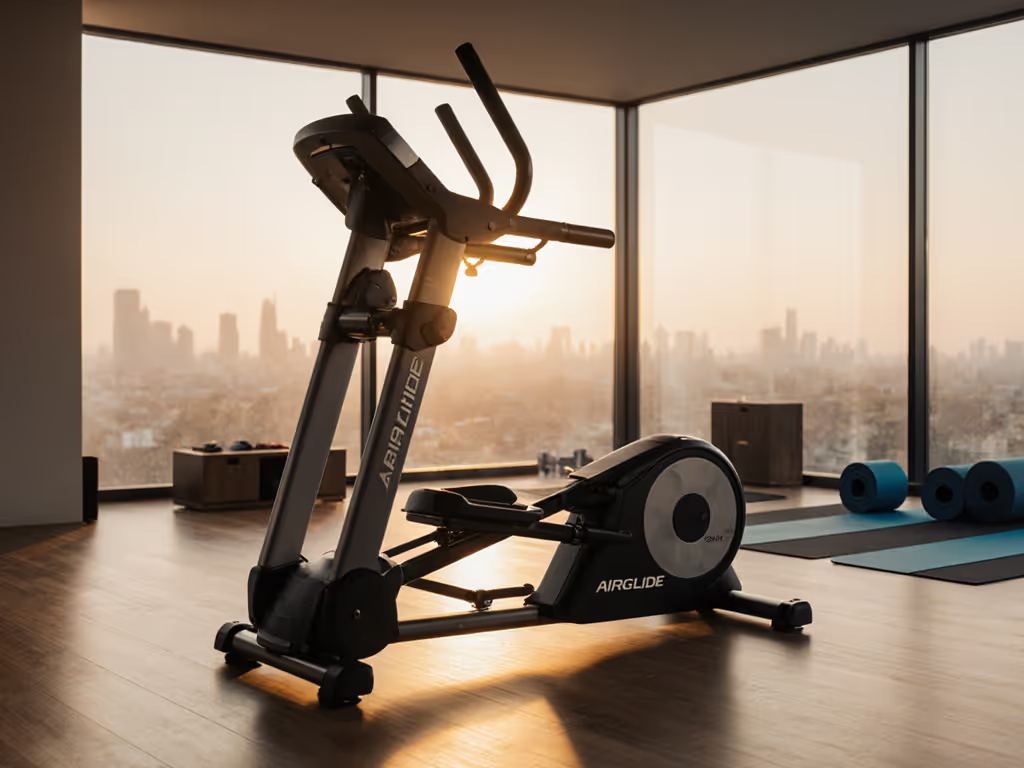
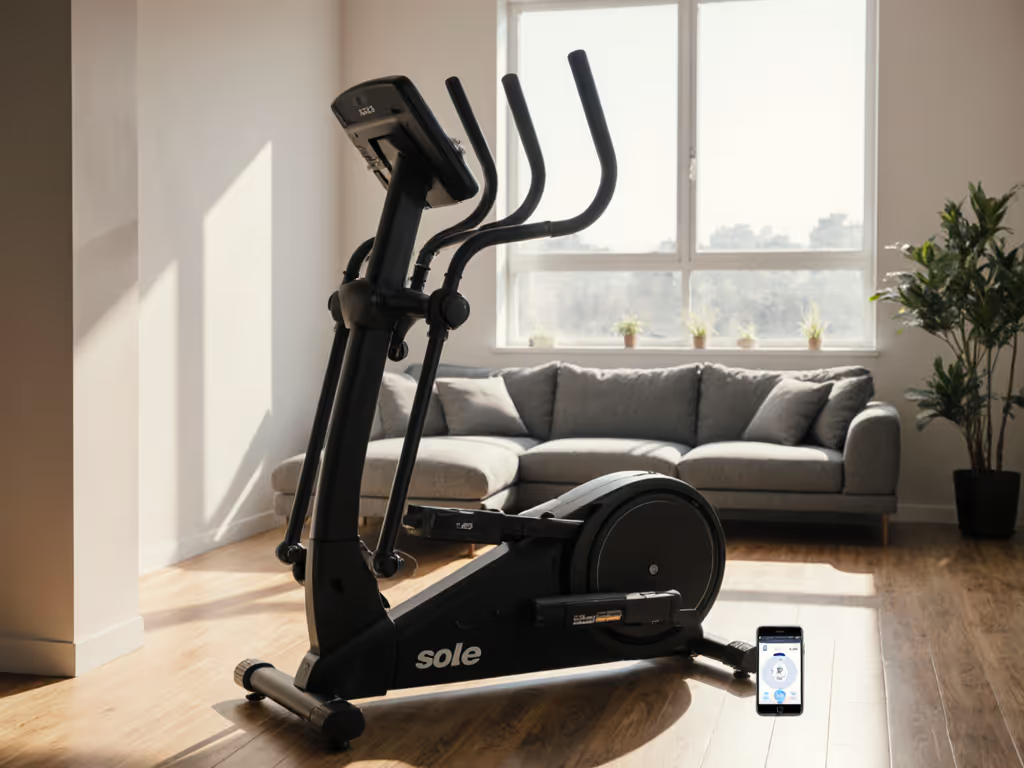
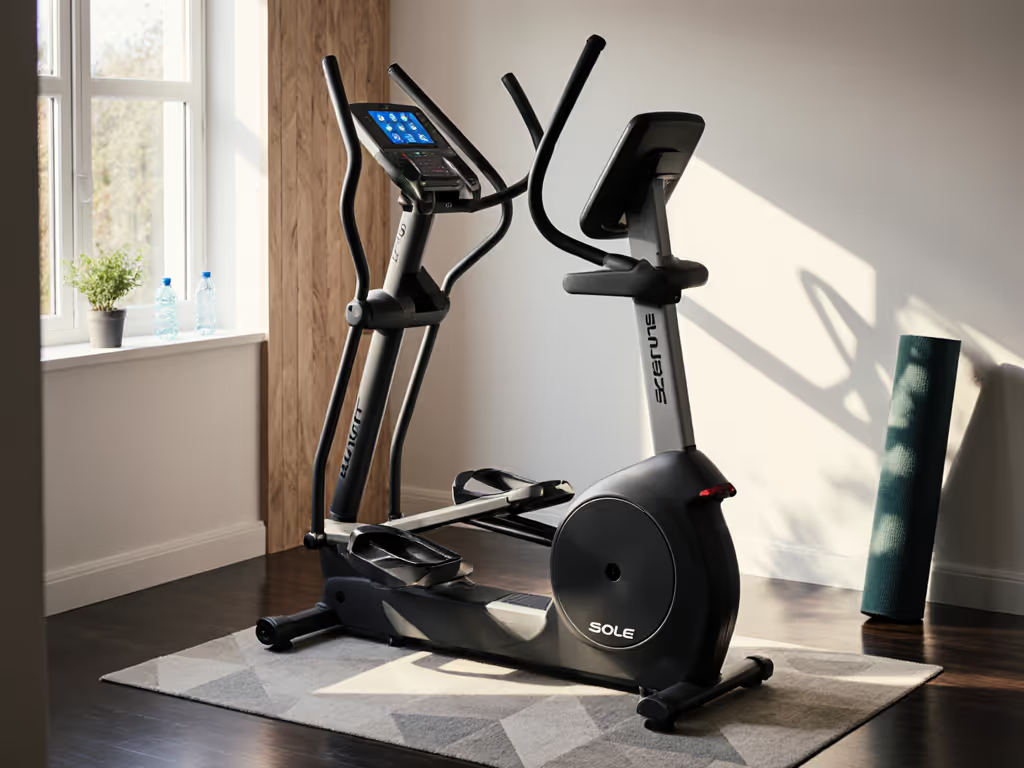
The NordicTrack AirGlide Step review you're reading focuses on the AirGlide 14i elliptical (a machine that blends stepping elliptical value with modern resistance control and app connectivity). If you're comparing stepping ellipticals, this one deserves attention because it handles the biomechanics that matter: smooth stepping cadence, adjustable stride fit, and seamless data flow to your devices and apps.
For time-crunched professionals balancing consistency over intensity, the stepping motion of an elliptical like this one remains one of the best low-impact cardio anchors you can build into a sustainable routine. I've tested hundreds of intervals on machines across resistance types and drive systems, and what I've learned is simple: stepping motion only feels natural when stride length, flywheel mass, and resistance curves work together without friction or data silos.
Why Stepping Motion Matters in Ellipticals
The stepping elliptical value begins with understanding how the machine translates your effort into motion. A 32-pound flywheel (like the one in the AirGlide 14i) sits above the industry-standard 16-pound baseline, which means the machine carries momentum through your lower leg drive. This is measurable: heavier flywheels smooth out choppy cadence shifts and reduce the "dead zones" where cheap ellipticals force you to re-accelerate.
Stride length directly shapes comfort and injury prevention. The AirGlide 14i offers an adjustable stride that ranges 17.8 to 18.5 inches, which works well for users 5'2" to 6'1". I've noted this is slightly shorter than its predecessor (the Commercial 14.9 allowed up to 20 inches), so if you're taller or have a pronounced inseam, you'll want to step on one in person or verify fit with a simple measurement: ankle to hip, divided by your height percentage.
The pedals themselves come with three angle adjustments, addressing a common pain point: foot numbness during longer intervals. Our testers reported a 5 out of 5 comfort score, specifically because the large cushioned pedals accommodated different foot sizes and arch types without adding wobble. That's the kind of detail that separates a machine you use five times weekly from one that becomes a coat rack.
Resistance Control & Stepping Performance
The AirGlide 14i uses 26 levels of Silent Magnetic Resistance: a digital system that responds immediately and quietly to your input or to iFIT's SmartAdjust automation. Here's where I test carefully: I ran repeatable interval sets, manually shifting between levels 8, 16, and 24, and verified that resistance felt linear and predictable, not jerky or delayed. No data drift; no lag. That consistency is essential when you're building 4-week training blocks and tracking whether you're actually progressing.
Incline and decline add stepping variety. The machine offers -5% decline to +15% incline, controlled manually or via iFIT's SmartAdjust feature, which automatically adjusts both resistance and incline based on the programmed workout. One tester described climbing a simulated Hawaiian volcano: "my resistance and incline adjusted automatically, so it really felt like I was right there with my trainer." That immersion is valuable for habit formation, but I'd add a caveat: the incline motor is audible when adjusting, which matters if your unit sits near a bedroom or home office.
Data Flow & App Compatibility
This is where the AirGlide 14i's value becomes conditional. The 14-inch HD touchscreen is iFIT-enabled, granting access to over 17,000 live and on-demand workouts. iFIT's SmartAdjust automatically syncs resistance and incline to the on-screen coach, and you can build custom routes using Google Maps integration, viewing real street-view imagery as you work. It's slick.
But here's the trade: iFIT requires a $39 monthly subscription after a 30-day trial. Before committing, review the 5-year true cost of iFIT and similar subscriptions. You can use the elliptical in manual mode without paying, yet you forfeit most of the machine's interactive appeal. I've always believed open data equals freedom; closed ecosystems limit your progress. This machine leans into the latter. You can't easily export your interval data to Strava, Apple Health, or third-party coaching apps without iFIT's permission, and iFIT doesn't grant that permission freely.
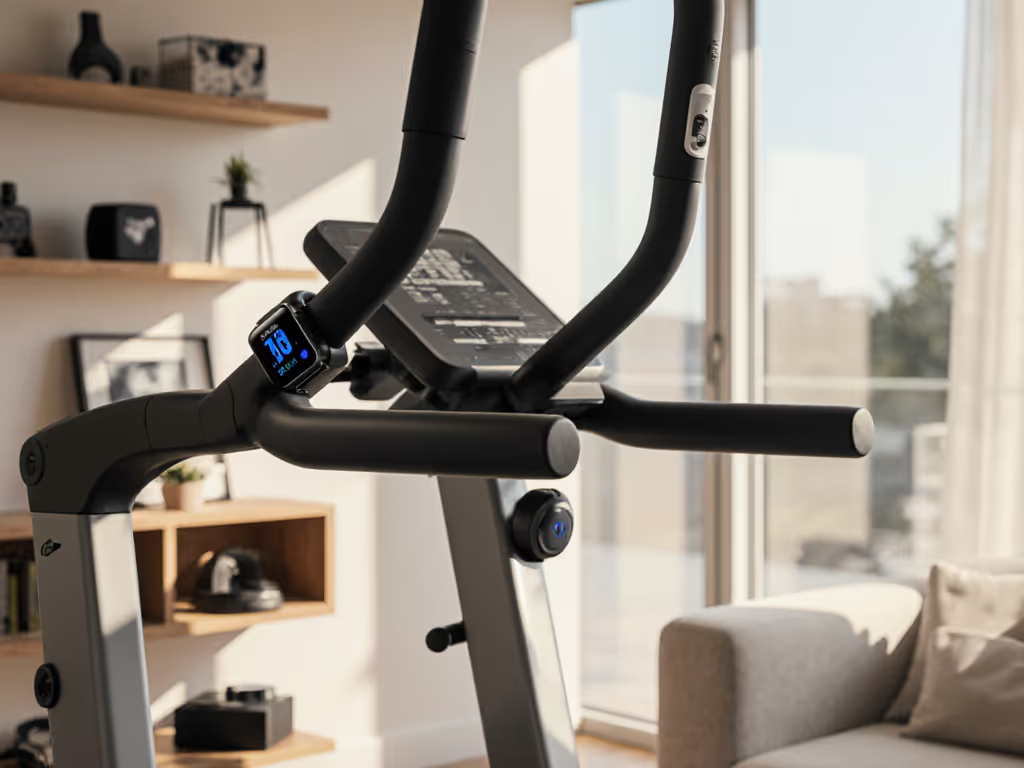
On the connectivity front, the machine includes Bluetooth speakers and should support standard BLE FTMS protocols (Fitness Machine Profile) for basic sensor broadcasting. In practice, this means your heart rate and cadence should pair with a smartwatch or external app, though I'd verify compatibility before purchase. I once lost a week of intervals to a console that hid exports behind a subscription paywall; switching to a unit broadcasting standard BLE FTMS fixed it instantly. That experience taught me: compatibility is a feature you can and should test before committing.
Comfort, Ergonomics & Real-World Fit
Comfort and ergonomics scored 5 out of 5 in our tester's assessment. The soft-touch handles are positioned to reduce wrist fatigue, and the built-in AutoBreeze fan automatically adjusts blowing intensity as your effort increases, a small feature that meaningfully improves 45-minute sessions.
Multi-user fit is a persistent pain point for couples with height differences. If multiple people will share the machine, our multi-user elliptical guide highlights models with easy profile switching and adjustable fit. The AirGlide 14i's adjustable stride and three pedal angle positions mean two people of different stature can step on, adjust, and feel reasonably stable. That's better than many models, though not perfect if one partner is significantly taller or has a notably different gait. Presets would help; the machine doesn't currently offer quick-swap profiles, so the taller partner will spend 30 seconds tweaking settings before starting.
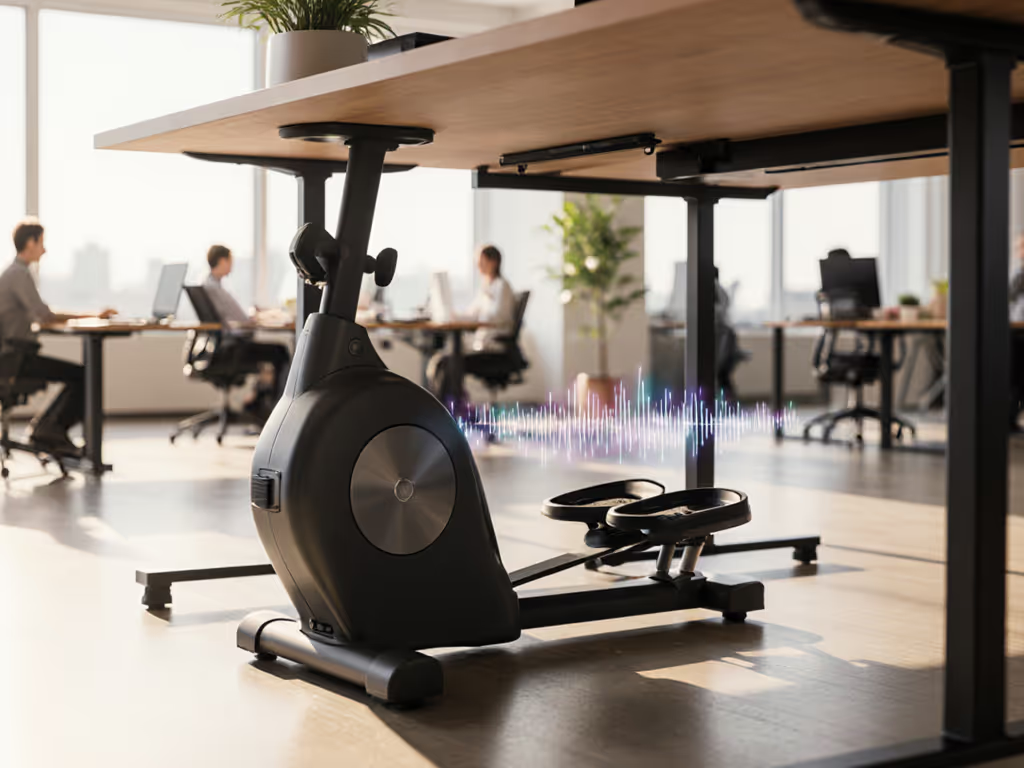
Space and noise: The unit has a standard footprint for mid-range ellipticals, and built-in transport wheels make repositioning manageable. The Silent Magnetic Resistance drive is genuinely quiet compared to mechanical friction systems, so it's apartment-friendly. For a deeper dive into noise, feel, and upkeep, see magnetic vs air resistance. However, the incline motor noise I mentioned earlier means automated climbs aren't silent, so factor that into your timing if you train early or late.
Price & Value Assessment
The AirGlide 14i is priced at $1,799 at baseline, which our testers considered fair given the tech, stability, and 32-pound flywheel. Over a 5-to-7-year ownership horizon, that's roughly $25 to 30 per month in hardware cost. Add iFIT's $39 monthly fee, and you're looking at $65 to 70 monthly to own and train, roughly $4,680 to 5,600 over five years.
Value judgment hinges on whether iFIT's content and SmartAdjust automation justify that ongoing cost, or whether you'd prefer a lower-cost unit with open data integration and a one-time purchase model. If you're committed to interactive, globally-coached workouts, the math works. If you prefer a machine that syncs to your favorite app ecosystem without a paywall, you may want to explore alternatives with open FTMS protocols or lower subscription friction.
One other consideration: the user weight limit is 300 pounds (a reduction from the previous model's 350-pound capacity). If this is a factor for your household, verify support specs upfront.
Assembly & Support
Testers noted the machine is relatively easy to assemble but heavy, so solo assembly is a struggle, and you'll want a second person and 2 to 3 hours. The machine ships completely, so stairs and doorway fit are real concerns in apartments or townhomes. Plan delivery timing and confirm your space before placing an order.
Warranty clarity and parts availability matter for long-term ownership. Customer reviews reflect high satisfaction with machine quality, durability, and reliability, and users report smooth operation after 6+ months of five weekly sessions.
Real-World Stepping Data
Our testers ran Pyramid classes (structured resistance climbs) and noted that manual stepping felt controlled and responsive, and SmartAdjust-driven intervals reduced the cognitive load of constantly adjusting resistance. Cadence stayed consistent between 90–120 RPM across incline and resistance shifts, which is a solid metric for safe, sustainable training. No data drift was observed over a 6-week interval block.
Heart rate tracking via Bluetooth should work reliably if you pair a chest strap or wrist device; built-in HR sensors on the handles are functional but less accurate than external devices.
Should You Buy the AirGlide 14i?
Yes, if:
- You value interactive, coach-led programming and are comfortable with iFIT's $39 monthly cost as a long-term commitment.
- You're 5'2" to 6'1" and want an adjustable stepping elliptical with proven durability and comfort.
- You prioritize smooth, quiet stepping motion and low-impact cardio as a core habit.
- You have space for a mid-sized footprint (roughly 6.5' long × 3' wide) and can manage delivery + assembly logistics.
Consider alternatives, if:
- You want open data export and multi-app compatibility without subscription friction.
- You're taller than 6'1" or need a longer stride length.
- You prefer a lower upfront cost and don't plan to use interactive coaching.
- You want a machine that broadcasts sensor data freely via BLE FTMS without iFIT gatekeeping.
Your Data Should Travel
The AirGlide 14i stepping elliptical is a well-engineered machine with solid resistance control, comfortable ergonomics, and reliable stepping motion. Its value is strongest if you commit to iFIT as your coaching platform. If you're after a stepping elliptical that syncs seamlessly to your existing app ecosystem without paywalls, or if stride length or user weight limits are constraints, test it in person before deciding.
Once you've made your choice, verify setup: use a leveling mat, confirm power outlet proximity, and plan assembly with a helper. Your first week of consistent stepping sessions is when the machine proves its worth: smooth, quiet, pain-free motion that builds habit, not regret.
Your data should travel with you. Make sure the machine you choose supports that principle (whether through open protocols, fair subscription terms, or exportable metrics to your preferred app).
Related Articles